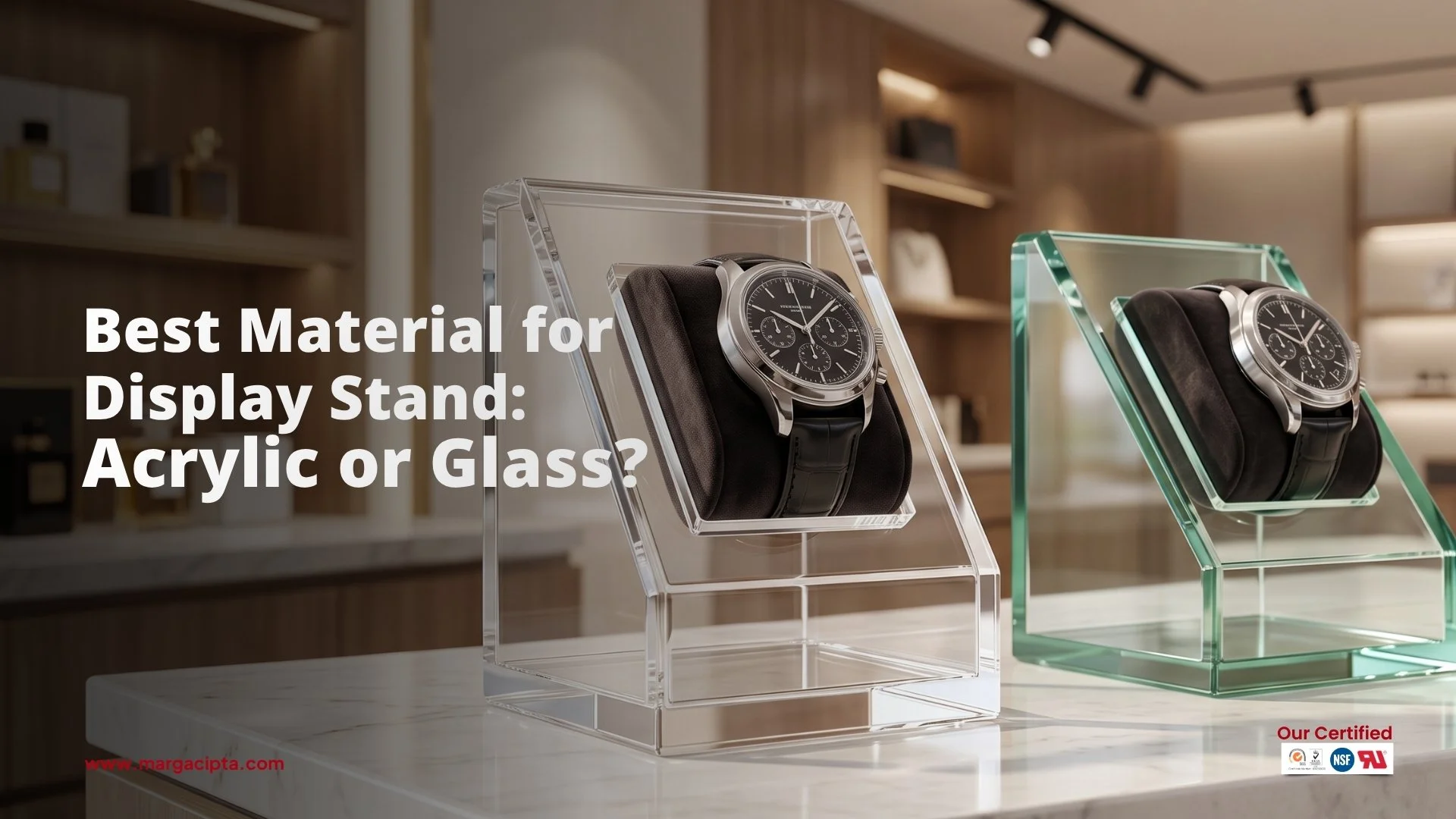
Best Material for Display Stand: Acrylic or Glass?

Informational

For most retail and commercial applications, acrylic is generally the best material for display stands. It provides excellent transparency, is significantly lighter than glass, offers better impact resistance, and is easier to fabricate into custom designs.

While glass remains a premium material for certain luxury applications, acrylic delivers a more practical balance of aesthetics, durability, and cost efficiency.

Acrylic vs Glass at a Glance

Here's a quick comparison between the two materials.

Feature Acrylic Glass
Transparancy Excellent Excellent
Weight Lightweight Heavy
Impact Resistance High Low
Fabrication Easy Limited
Customization Excellent Moderate
Cost Efficiency High Moderate

For most display stand projects, acrylic provides greater flexibility without sacrificing appearance.

Read also: Acrylic Sheet for Retail Displays: Benefits, Applications, and Design Ideas

Clarity and Appearance

Both acrylic and glass offer a clean, transparent look that showcases products effectively.

However, high-quality acrylic sheets provide excellent optical clarity while offering more design flexibility through various finishes, including:

  • Clear
  • Frosted
  • Satin
  • Colored
  • Mirrored

These options allow businesses to create customized displays that match their branding.

Durability

Display stands are frequently moved, cleaned, and handled.

Acrylic performs well because it is more impact-resistant than glass. If accidentally dropped or bumped, acrylic is less likely to shatter.

Glass, while visually elegant, is more fragile and requires careful handling during transportation and installation.

Weight and Installation

Acrylic is considerably lighter than glass, making it easier to:

  • Transport
  • Install
  • Rearrange
  • Store

This advantage is especially valuable for exhibition displays, retail promotions, and modular merchandising systems.

Fabrication Flexibility

One of acrylic's biggest advantages is its compatibility with modern fabrication methods.

Acrylic sheets can be:

  • Laser cut
  • CNC machined
  • Thermoformed
  • Engraved
  • UV printed

This allows designers to produce highly customized display stands with clean edges and intricate details.

Glass generally requires more specialized processing and offers fewer customization options.

Cost Considerations

Acrylic is often the more cost-effective solution.

Lower transportation costs, easier fabrication, and reduced breakage risks contribute to better overall project value.

For businesses producing multiple display stands, acrylic offers significant long-term savings.

When Glass May Be Suitable

Although acrylic is preferred for most applications, glass may still be suitable for:

  • Luxury furniture
  • Permanent architectural installations
  • High-end decorative displays

However, these projects often involve higher installation costs and stricter handling requirements.

Read also: How to Bend Acrylic Sheet: Methods, Tools, and Best Practices

Why Material Quality Matters

Regardless of the material chosen, quality has a direct impact on the final result.

Premium acrylic sheets provide:

  • Better clarity
  • Consistent thickness
  • Cleaner fabrication
  • Improved durability
  • Long-lasting appearance

Marga Cipta supplies high-quality acrylic sheets suitable for display stands, retail displays, product showcases, and commercial fabrication projects.

Conclusion

When comparing the best material for display stand—acrylic or glass—acrylic is the preferred choice for most retail, commercial, and promotional applications.

Its combination of clarity, lightweight construction, durability, and fabrication flexibility makes it a reliable solution for modern display systems.

Build Better Display Stands with Marga Cipta

Looking for premium acrylic sheets for your next display project? Marga Cipta offers high-quality acrylic sheets in various sizes, thicknesses, and finishes to meet your fabrication needs.

For inquiries or orders, email info@margacipta.com.

For product updates, inspiration, and application ideas, follow Instagram @margacipta.


News Release

Acrylic Ideas for Home Decor You'll Love

Beyond the usual tables and chairs, there are unique acrylic ideas for home decor you’ve never thought of, and they might just inspire your next project.

Looking for a way to refresh your home with a modern touch? Acrylic is a versatile material that blends durability with style, making it a perfect choice for interior design. 

Check some acrylic ideas that you might want to create. 

1. Acrylic Floating Shelves

Clear acrylic shelves create a sleek, minimalist look while making your walls appear more spacious. They’re perfect for displaying books, plants, or collectibles without adding visual clutter.

Read also: Things to Check Before Buying Acrylic

2. Acrylic Coffee Table with a Twist

Try a round or geometric-shaped acrylic coffee table to give your living room a modern, airy vibe. The transparency makes even small spaces feel larger.

3. Wall Art with Acrylic Panels

Acrylic sheets can be transformed into colorful, layered wall art. Add paint, prints, or engravings to create a bold statement piece that instantly upgrades your room.

4. Acrylic Frames for a Gallery Wall

Unlike traditional wooden frames, acrylic photo frames offer a contemporary edge. Use them to create a gallery wall that feels light, modern, and easy to update over time.

5. Acrylic Lamp Stands and Lighting

Acrylic is perfect for diffusing light softly, making it ideal for lamp bases or creative lighting fixtures. It adds a stylish glow to bedrooms, living rooms, or even workspaces.

Read also: Does Acrylic Shatter? Find Out Its Strength and Durability

6. DIY Acrylic Accessories

From key holders to desk organizers, acrylic can be cut and shaped into practical yet decorative accessories. These little touches add functionality while keeping the aesthetic chic.

7. Acrylic Plant Stands

Combine greenery with modern design by using acrylic plant stands. The transparent look highlights your plants while giving the illusion of floating pots.

Acrylic is more than just a modern material, it’s a design tool that can transform your home.

From shelves and furniture to wall art and accessories, these acrylic ideas for home decor will bring a fresh, stylish, and unique vibe to your space.

PT Margacipta Wirasentosa offers high-quality cast acrylic made from 100% virgin MMA, with NSF-certified options for food contact applications.

Acrylic vs Polycarbonate: Which One Should You Use?

When choosing a plastic sheet for your project, two materials often come to mind: acrylic and polycarbonate. While both are widely used for signage, protective panels, and displays, the decision between them depends on what matters most: strength, clarity, or cost.

In this article, we compare acrylic and polycarbonate across key aspects and explain why acrylic may be the better solution for most everyday applications.

Strength: Durable, But Do You Need Extreme Impact Resistance?

Polycarbonate is often praised for its extreme impact resistance—up to 250 times stronger than glass. It’s frequently used in bulletproof windows, riot shields, and industrial machinery guards. If you're designing for high-risk environments with potential heavy impact, polycarbonate might make sense.

But here’s the reality: most applications don't need that level of impact resistance.

Acrylic, though not as tough as polycarbonate, is still up to 10 times stronger than glass. For general uses like signage, display cases, skylights, or protective barriers, acrylic offers more than enough durability without the extra cost.

Read also: Benefits of Using Clear Cast Acrylic Sheet

Clarity: Acrylic Offers Superior Visual Appeal

When it comes to optical clarity, acrylic takes the lead. Acrylic sheets provide up to 92% light transmission, giving them a crystal-clear, glass-like appearance. They’re less likely to yellow over time and are known for maintaining their clarity in outdoor and indoor environments.

Polycarbonate, on the other hand, may appear slightly duller and can develop a yellowish tint after prolonged exposure to UV light—unless treated with an extra coating.

If visual presentation matters, especially in retail, architectural, or decorative use, acrylic is the smarter choice.

Cost: Acrylic is More Budget-Friendly

From a pricing perspective, acrylic is generally more affordable than polycarbonate.

For businesses or projects that need large-scale installations—like signage, partitions, or decorative panels—acrylic provides an ideal balance of performance and price.

Polycarbonate’s high cost only makes sense when extreme toughness is necessary. For most users, choosing acrylic means getting a high-quality material without overspending.

Ease of Fabrication and Maintenance

Another advantage of acrylic is how easy it is to cut, drill, polish, and thermoform. You’ll get cleaner cuts and smoother edges, making it perfect for projects that require precision or aesthetic finishes.

Polycarbonate is tougher to work with and prone to scratches without special care. Acrylic is also easier to clean and maintain, requiring only mild soap and water.

Read also: Why Cast Acrylic Is Better Than Glass: Benefits You Should Know

When Should You Choose Acrylic?

Unless you’re building for high-impact or industrial-grade applications, acrylic is the practical, beautiful, and cost-effective option. It's the go-to choice for:

  • Retail displays and signage

  • Home and office decor

  • Windows and skylights

  • Sneeze guards and partitions

  • Lighting covers and illuminated signs

Both acrylic and polycarbonate have their place in the market. But if your project prioritizes clarity, affordability, and ease of use, then acrylic is clearly the winner.

It offers excellent strength, beautiful transparency, and lasting value—perfect for a wide range of uses without breaking the budget.

Margacipta Wirasentosa provide high-quality cast acrylic sheets that are reliable, customizable, and ready to elevate your next project.

Acrylic Sheet Price Factors: What Affects the Cost of Acrylic Sheets?

The cost of acrylic sheets depends on several factors, including material type, thickness, sheet size, surface finish, and fabrication requirements.

Understanding these factors can help businesses and buyers make informed purchasing decisions while selecting the right acrylic sheet for their applications.

Whether you're sourcing acrylic for signage, displays, interiors, or industrial projects, knowing what influences pricing can help you better plan your budget.

Why Acrylic Sheet Prices Vary

Not all acrylic sheets are manufactured the same way. Different production methods, material specifications, and finishing options can significantly impact the final cost.

The price of acrylic sheets reflects both the material quality and the intended application.

Read also: Why Cast Acrylic Is Better Than Glass: Benefits You Should Know

1. Type of Acrylic Sheet

One of the biggest factors affecting cost is the type of acrylic used.

Cast Acrylic

Cast acrylic is typically more expensive because it offers:

  • Better optical clarity
  • Superior engraving quality
  • Improved chemical resistance
  • Better overall finish

It is commonly used for premium signage, displays, and decorative applications.

Extruded Acrylic

Extruded acrylic is generally more cost-effective and suitable for standard fabrication projects. While it offers good performance, it may not provide the same level of quality as cast acrylic for certain applications.

2. Thickness of the Sheet

Thicker acrylic sheets require more raw material, resulting in higher costs.

For example:

  • 2 mm acrylic sheets are generally more affordable
  • 10 mm acrylic sheets cost significantly more due to increased material usage

Choosing the right thickness helps balance performance and budget.

3. Sheet Size and Dimensions

Larger acrylic sheets naturally cost more because they contain more material.

Custom sizes may also affect pricing due to:

  • Additional cutting processes
  • Material optimization requirements
  • Production efficiency considerations

Selecting standard sheet sizes can sometimes help reduce costs.

4. Surface Finish

Different finishes influence manufacturing complexity and pricing.

Common options include:

  • Clear acrylic
  • Satin acrylic
  • Frosted acrylic
  • Colored acrylic
  • Mirrored acrylic

Specialty finishes often carry higher costs because of additional production processes.

5. Color and Design Requirements

Colored acrylic sheets typically cost more than standard clear acrylic sheets.

Factors that contribute to pricing include:

  • Pigment quality
  • Color consistency
  • Manufacturing complexity

Special or custom colors may further impact overall costs.

6. Fabrication Requirements

Additional processing services can increase the total project cost.

Examples include:

  • Laser cutting
  • CNC cutting
  • Engraving
  • UV printing
  • Edge polishing

The more complex the fabrication process, the higher the final cost is likely to be.

7. Material Quality

Premium acrylic sheets often provide:

  • Better clarity
  • More consistent thickness
  • Improved durability
  • Better weather resistance

While higher-quality materials may have a higher initial price, they often deliver better long-term value and performance.

Read also: Clear Acrylic Sheet vs Glass: Pros, Cons & Key Differences

How to Optimize Acrylic Costs

To maximize value:

  • Choose the appropriate thickness
  • Select the right acrylic type
  • Avoid unnecessary customizations
  • Source materials from trusted suppliers

A well-planned specification helps achieve both performance and cost efficiency

Conclusion

Several acrylic sheet price factors influence the overall cost of a project, including material type, thickness, size, finish, and fabrication requirements.

Understanding these variables allows buyers to select the most suitable acrylic sheet while managing budgets effectively. Investing in high-quality acrylic can also provide long-term benefits through improved durability and performance.

Want to Order High-Quality Acrylic Sheets?

Marga Cipta offers premium acrylic sheets in various thicknesses, colors, and finishes for signage, displays, interiors, and fabrication projects.

For inquiries or orders, email info@margacipta.com.

For product updates, inspiration, and application ideas, follow Instagram @margacipta.
Best Acrylic Thickness for Ornaments: Size Guide for Perfect Results

The best acrylic thickness for ornaments is typically between 2 mm and 3 mm.

This range provides the ideal balance between durability, lightweight structure, and ease of cutting.

Choosing the right thickness is crucial to ensure that ornaments are strong enough to hold their shape while still looking clean and refined.

Why Thickness Matters for Ornaments

Ornaments are often designed to be lightweight and decorative. Using the wrong thickness can affect both appearance and performance:

  • Too thin → may bend or break easily
  • Too thick → looks bulky and harder to cut

The right thickness ensures a professional finish without compromising functionality.

Read also: Colored Acrylic Sheet for Ornaments: Types, Colors, and Applications

Recommended Thickness Based on Use

Here’s a practical guide:

2 mm acrylic sheet

  • Best for small and lightweight ornaments
  • Ideal for hanging decorations and detailed designs

3 mm acrylic sheet

  • Suitable for slightly larger or layered ornaments
  • Provides better rigidity and durability

For most applications, these two thickness options cover the majority of design needs.

Factors to Consider When Choosing Thickness

1. Ornament Size

Larger ornaments require thicker acrylic to maintain shape and prevent bending.

2. Design Complexity

Intricate designs benefit from thinner sheets for easier cutting and finer detail.

3. Usage Type

If the ornament will be handled frequently or used long-term, slightly thicker acrylic offers better durability.

Fabrication Considerations

Acrylic sheets are widely used in fabrication processes such as:

  • Laser cutting
  • Engraving
  • UV printing

Using the correct thickness ensures clean edges, precise cuts, and minimal material waste.

Thinner sheets are easier to cut, while thicker sheets provide a more solid feel.

Why Acrylic is Ideal for Ornaments

Acrylic is a preferred material because it offers:

  • Smooth surface for clean finishing
  • High clarity and color options
  • Lightweight structure
  • Good durability for decorative use

These qualities make it suitable for both handmade and mass-produced ornaments.

Read also: Acrylic vs Glass for Plaque: Which Material is Better?

Importance of Material Quality

Even with the right thickness, material quality plays a key role.

High-quality acrylic sheets provide:

  • Consistent thickness
  • Better cutting performance
  • Reduced risk of cracking

For businesses, this ensures more efficient production and consistent output.

Marga Cipta offers high-quality acrylic sheets suitable for various ornament applications, supporting both small-scale and bulk production needs.

Conclusion

The best acrylic thickness for ornaments is generally between 2 mm and 3 mm, depending on size and design.

By choosing the right thickness and using high-quality acrylic sheets, you can achieve ornaments that are durable, lightweight, and visually appealing.

Ready to explore our cast acrylic options? At Margacipta Wirasentosa, we offer high-quality clear cast acrylic sheets from 100% virgin MMA in various thicknesses and custom sizes to fit your needs.

Reach to our Instagram or download our Product Catalog for more information.