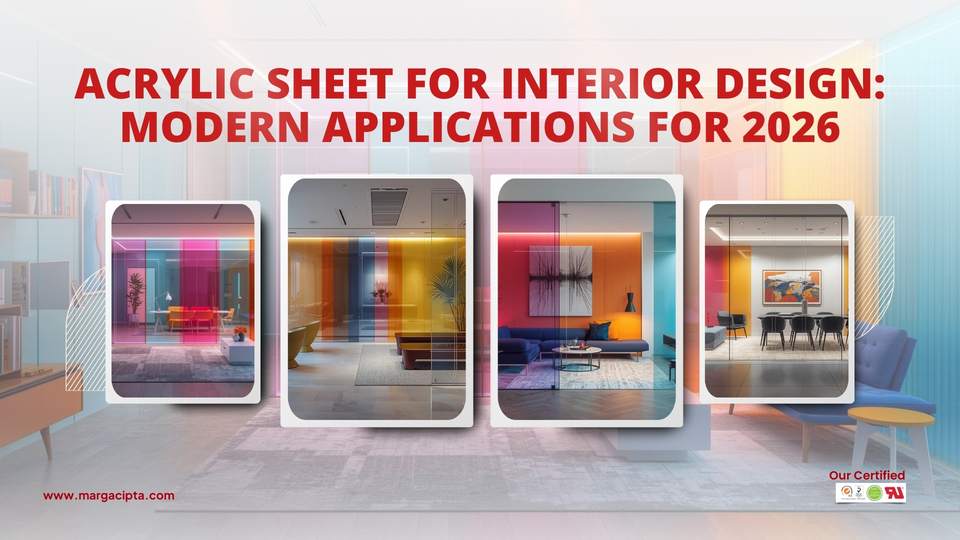
Acrylic Sheet for Interior Design: Modern Applications for 2026 | Marga Cipta

Informational

As we enter 2026, interior design trends continue to shift toward modern, minimalist concepts that emphasize durability, aesthetics, and efficiency.

One material that stands out in this movement is the acrylic sheet for interior design. With its clarity, versatility, and durability, acrylic has become a preferred choice among interior designers, architects, and business owners.

Marga Cipta, as the producer of MC® Cast Acrylic Sheet, offers high-quality acrylic solutions perfectly suited for residential, retail, hospitality, and large commercial projects.

Find out more about the reason acrylic will be the best solution for interior design and architecture.

1. Exceptional Clarity for Modern and Open Spaces

One of the strongest benefits of acrylic sheet is its exceptional optical clarity, which closely resembles glass but with superior durability and lighter weight.

In 2026, when open-concept spaces and natural lighting continue to dominate, acrylic becomes an ideal material for:

  • Transparent room dividers
  • Decorative wall panels
  • Minimalist shelving
  • Lighting covers and diffusers

These applications help create interiors that feel spacious, modern, and visually clean. Perfect for homes, studios, and showrooms.

Read also: Acrylic Application for Accessories: Stylish, Durable, and Versatile

2. Wide Color and Finishing Options for Creative Accents

Unlike traditional glass, MC® Acrylic Sheet is available in a wide range of colors, transparencies, textures, and finishes. This opens endless design possibilities for aesthetic interior features such as:

  • Colored wall panels
  • Reception backdrops
  • Retail product displays
  • Glossy, modern furniture

Acrylic is also highly workable. It can be heated, molded, and shaped into curves or custom forms, making it ideal for bold statement pieces and artistic installations.

3. High Durability for Commercial Environments

Commercial interiors require materials that are long-lasting, impact-resistant, and easy to maintain. Key durability advantages include:

  • Stronger impact resistance compared to glass
  • Does not shatter into dangerous pieces
  • Resistant to yellowing
  • Smooth surfaces that are easy to clean

These benefits make acrylic suitable for high-traffic environments such as retail stores, hotels, clinics, and public spaces.

Read also: Acrylic Usage Trends 2026: New Applications in Design and Industry

4. Cost-Efficient Option for Premium Aesthetic

Acrylic provides a premium, modern look at a more affordable cost than materials like tempered glass, marble, or metal. Many businesses, especially retail and SMEs, use acrylic sheet for:

  • Signage and brand displays
  • Product showcases
  • POP (Point of Purchase) displays
  • Decorative lighting elements

With its balance of aesthetics and durability, acrylic becomes a long-term investment for enhancing interior visuals.

5. Interior Design Trends Using Acrylic Sheet in 2026

Several acrylic-based design trends are expected to rise in popularity throughout 2026:

  • Modular acrylic furniture that is lightweight yet stylish
  • Acrylic LED panels for futuristic ambient lighting
  • Acrylic kitchen backsplashes that are sleek and easy to clean
  • Sustainable acrylic decor supporting eco-friendly design concepts

These trends reflect the increasing demand for efficient, modern, and sustainable materials.

Conclusion

With its clarity, versatility, and durability, it is no surprise that acrylic sheet for interior design continues to be a leading material in 2026.

MC® Cast Acrylic Sheet offers reliable quality that supports a wide range of interior projects, from homes to commercial buildings.

Whether you are designing a modern living space, a retail environment, or a commercial facility, acrylic sheets provide a stylish and efficient solution for today’s design needs.

Want to order? E-mail us at info@margacipta.com and get more information about our acrylic products.

News Release

Acrylic Sheet Thickness Guide: How to Choose the Right One

When working with acrylic sheets for your project, whether it's for signage, display units, or protective panels, choosing the right acrylic sheet thickness is just as important as selecting the right color or finish. 

Thickness affects not only the durability and appearance of your acrylic but also how it performs under pressure or load.

In this guide, we’ll walk you through different acrylic sheet thickness options and the types of projects they’re best suited for.

Why Acrylic Sheet Thickness Matters

The thickness of an acrylic sheet determines its strength, rigidity, and suitability for specific uses. 

A sheet that is too thin might bend or crack under stress, while one that’s too thick could be unnecessarily heavy and more costly. 

By understanding how each thickness performs, you can make a more informed decision that balances durability, appearance, and budget.

Read also: Choose the Right Cast Acrylic Color for Your Project

1. Thin Acrylic Sheets (1.5mm–3mm): Lightweight and Flexible

These thin sheets are commonly used for light-duty applications such as brochure holders, menu covers, small signage, DIY crafts, and protective face shields. 

They’re easy to cut and shape, making them ideal for creative and decorative projects that don’t require heavy impact resistance.

However, due to their flexibility, they are not recommended for structures that need to support weight or endure constant handling.

2. Medium Thickness (4.5mm–6mm): Versatile and Sturdy

Acrylic sheets in the mid-range thickness offer a perfect balance between flexibility and strength. This makes them suitable for a wide range of uses, including display cases, retail fixtures, and architectural panels. 

They provide good visual clarity and resistance to breakage, while still being lightweight enough for wall-mounted or suspended designs.

These are often used in interior partitions, desk dividers, or lightboxes, especially when durability and a polished appearance are both priorities.

3. Thick Acrylic Sheets (8mm–12mm): Durable and Impact-Resistant

For applications that require greater structural strength, such as aquarium panels, furniture, shelving, or heavy-duty display stands, thicker acrylic sheets in the 8mm to 12mm range are a solid choice. 

These sheets can withstand more weight and pressure, offering high impact resistance and rigidity.

Thicker sheets also provide better sound insulation and can be used in environments where both functionality and safety are essential.

Read also: Benefits of Using Clear Cast Acrylic Sheet

4. Extra Thick Acrylic (15mm and above): Structural and Architectural Uses

At 15mm or thicker, acrylic sheets are often chosen for architectural glazing, outdoor signage, large installations, and furniture with load-bearing needs. 

These sheets are highly rigid and can serve as structural components or even as an alternative to glass in many applications.

They’re often used in museums, commercial buildings, and high-end retail designs where aesthetics and strength go hand in hand.

How to Choose the Right Thickness for Your Project

To select the right acrylic sheet thickness, here are some things to consider:

  • Weight or pressure the sheet needs to support
  • Installation method (e.g., freestanding, wall-mounted, framed)
  • Environmental exposure (e.g., indoor vs. outdoor)
  • Aesthetic requirements (how polished or sleek it should appear)
  • Budget considerations

If you’re working with lighting, remember that thinner sheets may allow better light transmission, while thicker sheets can give a more diffused and solid look.

Understanding acrylic sheet thickness is crucial for ensuring that your design looks great and performs as expected. 

From delicate crafts to structural installations, choosing the right thickness enhances both the function and lifespan of your acrylic piece.

At Margacipta Wirasentosa, we offer a wide range of acrylic sheet thicknesses tailored for every kind of project.

Need help finding the right acrylic sheet thickness? Contact our team or visit our Instagram for recommendations and high-quality cast acrylic sheets that match your vision.

Introducing Our LED VIVID & LED Ready Cast Acrylic Sheet

September 25, 2018September 26, 2018 mcwsi


PT MARGACIPTA will be launching its new line of MC® LED VIVID AND LED READY CAST ACRYLIC during the “Margarita’s with Margacipta” event at the IAPD Annual Convention in Washington.


MC® LED Ready Cast Acrylic Sheet is formulated to optimize color performance in front of today’s LED systems used in the sign industry; display market. You’ll see excellent brightness and even illumination with NO HOT SPOTS!  


MC® LED Vivid Cast Acrylic Sheet is chemically formulated with light diffusing technologies that enhance maximum brightness and light illuminating uniformity particularly suited to LED edge lighting.


See you on Tuesday at 6p at The Side Car in the Washington Hilton or Contact Us or Your Account Rep for More Details and Pricing.


Cast Acrylic, LED Acrylic, Cast Acrylic, display, LED, lights, plastic, sign

What Is Acrylic Made Of? Composition, Properties, and Uses Explained

Acrylic is made from polymethyl methacrylate (PMMA), a transparent thermoplastic created from methyl methacrylate (MMA) monomers. This material is known for its excellent clarity, durability, and versatility, making it one of the most widely used alternatives to glass.

From signage and displays to architectural and industrial applications, acrylic sheets are valued for their combination of strength, aesthetics, and ease of fabrication.

Understanding what acrylic is made of can help businesses, designers, and manufacturers choose the right material for their projects.

Read also: What is Satin Acrylic? A Complete Guide to Its Look and Function

What Is Acrylic?

Acrylic is a synthetic plastic material that belongs to the family of thermoplastics. The most common form of acrylic used in sheets is PMMA, which is produced through a polymerization process.

During manufacturing, small molecules called methyl methacrylate monomers are chemically bonded together to form long polymer chains. The result is a strong, transparent material with excellent optical properties.

Because of its glass-like appearance and practical advantages, acrylic has become a popular material in various industries.

Main Components of Acrylic

The primary ingredient in acrylic is:

Polymethyl Methacrylate (PMMA)

PMMA is a transparent plastic that offers:

  • High optical clarity
  • Good weather resistance
  • Lightweight performance
  • Excellent fabrication flexibility

This composition gives acrylic its distinctive combination of transparency and durability.

Depending on the manufacturing process, additives may also be incorporated to enhance specific properties such as UV resistance, color stability, or surface finish.

Key Properties of Acrylic

One of the reasons acrylic is so widely used is its unique set of material properties.

Excellent Clarity

Acrylic offers outstanding light transmission, allowing it to achieve a clear and bright appearance. This makes it ideal for applications where visibility is important.

Lightweight Structure

Compared to glass, acrylic is significantly lighter, making transportation, installation, and fabrication easier.

Weather Resistance

High-quality acrylic sheets can withstand prolonged exposure to sunlight and outdoor conditions while maintaining their appearance.

Impact Resistance

Although not as impact-resistant as polycarbonate, acrylic is generally stronger and more durable than traditional glass.

Easy Fabrication

Acrylic can be cut, drilled, engraved, thermoformed, and printed, making it suitable for a wide range of custom projects.

Common Types of Acrylic Sheets

Acrylic sheets are available in various forms, including:

  • Clear acrylic sheets
  • Colored acrylic sheets
  • Frosted acrylic sheets
  • Satin acrylic sheets
  • Mirrored acrylic sheets

Each type is designed to meet different aesthetic and functional requirements.

Common Uses of Acrylic

Because of its versatility, acrylic is used in numerous applications.

Popular examples include:

1. Signage and Displays

Acrylic's clarity and printability make it a preferred material for retail and commercial signage.

2. Interior Design

Decorative panels, partitions, and furniture elements often utilize acrylic for its modern appearance.

3. Industrial Applications

Many industries use acrylic for machine guards, protective covers, and fabricated components.

4. Architectural Features

Acrylic is frequently incorporated into building designs, skylights, and decorative structures.

Read also: Is Acrylic Waterproof? Understanding Its Water Resistance

Why Material Quality Matters

Not all acrylic sheets offer the same performance.

High-quality acrylic provides:

  • Better clarity
  • Consistent thickness
  • Improved weather resistance
  • Reliable fabrication results

Marga Cipta supplies premium acrylic sheets suitable for signage, displays, interiors, fabrication, and industrial applications.

Conclusion

So, what is acrylic made of? Acrylic is primarily composed of polymethyl methacrylate (PMMA), a transparent thermoplastic known for its durability, clarity, and versatility.

Its unique composition allows it to be used across a wide range of industries and applications. By choosing high-quality acrylic sheets, businesses and manufacturers can achieve reliable performance and professional results.

Ready to explore our cast acrylic options? At Margacipta Wirasentosa, we offer high-quality clear cast acrylic sheets from 100% virgin MMA in various thicknesses and custom sizes to fit your needs.

Reach out to our Instagram or download our Product Catalog for more information.

Bulk Acrylic Sheet Supplier: What to Look for Before Buying

Choosing the right bulk acrylic sheet supplier is essential for ensuring consistent product quality, reliable supply, and long-term business success. 

Whether you're a distributor, manufacturer, fabricator, or commercial buyer, partnering with a trusted supplier helps improve production efficiency while reducing material-related issues.

Before purchasing acrylic sheets in bulk, it's important to evaluate more than just pricing.

Why Choosing the Right Supplier Matters

Bulk purchases often support ongoing production or large-scale projects.

A reliable supplier helps ensure:

  • Consistent material quality
  • Stable inventory availability
  • Reliable delivery schedules
  • Technical product support
  • Better long-term value

Working with the right supplier can reduce production delays and minimize material waste.

Read also: Acrylic Sheet Price Factors: What Affects the Cost of Acrylic Sheets?

1. Product Quality

The first factor to evaluate is the quality of the acrylic sheets.

High-quality acrylic should provide:

  • Excellent optical clarity
  • Consistent thickness
  • Smooth surfaces
  • Reliable durability
  • Stable color consistency

Consistent material quality contributes to better fabrication results and improved product performance.

2. Product Range

A supplier with a comprehensive product portfolio can better support different project requirements.

Look for suppliers offering:

  • Clear acrylic sheets
  • Colored acrylic sheets
  • Satin acrylic
  • Frosted acrylic
  • Various thicknesses and sheet sizes

A wider selection allows greater flexibility across multiple applications.

3. Manufacturing Standards

Reliable suppliers maintain strict manufacturing standards to ensure consistency from one batch to another.

Consistent production quality helps reduce:

  • Material defects
  • Fabrication issues
  • Dimensional variations
  • Color inconsistencies

This is especially important for businesses handling repeat orders.

4. Supply Reliability

A dependable supplier should be able to maintain stable inventory and deliver products on schedule.

Reliable supply helps businesses avoid:

  • Production interruptions
  • Delayed customer deliveries
  • Emergency material sourcing

Consistency is particularly important for manufacturers and distributors purchasing in bulk.

5. Technical Support

Experienced suppliers should be able to assist customers with product selection based on application requirements.

This may include recommendations regarding:

  • Acrylic type
  • Sheet thickness
  • Surface finish
  • Fabrication compatibility

Technical guidance helps buyers select the most appropriate material for their projects.

6. Long-Term Value

While price is an important consideration, the lowest price does not always provide the best value.

Premium acrylic sheets often deliver:

  • Better durability
  • Improved fabrication performance
  • Lower defect rates
  • Longer service life

Evaluating overall value rather than price alone helps support better purchasing decisions.

Read also: How to Bend Acrylic Sheet: Methods, Tools, and Best Practices

Why Choose Marga Cipta

Marga Cipta is a trusted manufacturer of premium cast acrylic sheets, serving customers across various industries.

Our acrylic sheets are suitable for:

  • Signage
  • Retail displays
  • Interior design
  • Industrial fabrication
  • Architectural applications
  • Custom manufacturing

With consistent quality and a wide range of product options, Marga Cipta supports businesses requiring reliable acrylic materials for bulk purchases.

Conclusion

Selecting the right bulk acrylic sheet supplier involves evaluating product quality, manufacturing consistency, technical expertise, and long-term reliability—not just price.

Partnering with a trusted supplier helps businesses achieve better production efficiency and consistent product quality across every project.

Partner with Marga Cipta for Premium Acrylic Sheets

Looking for a reliable bulk acrylic sheet supplier? Marga Cipta offers premium cast acrylic sheets in various sizes, thicknesses, and finishes to support your business needs.

For inquiries or bulk orders, email info@margacipta.com.

For product information, project inspiration, and the latest updates, follow Instagram @margacipta.