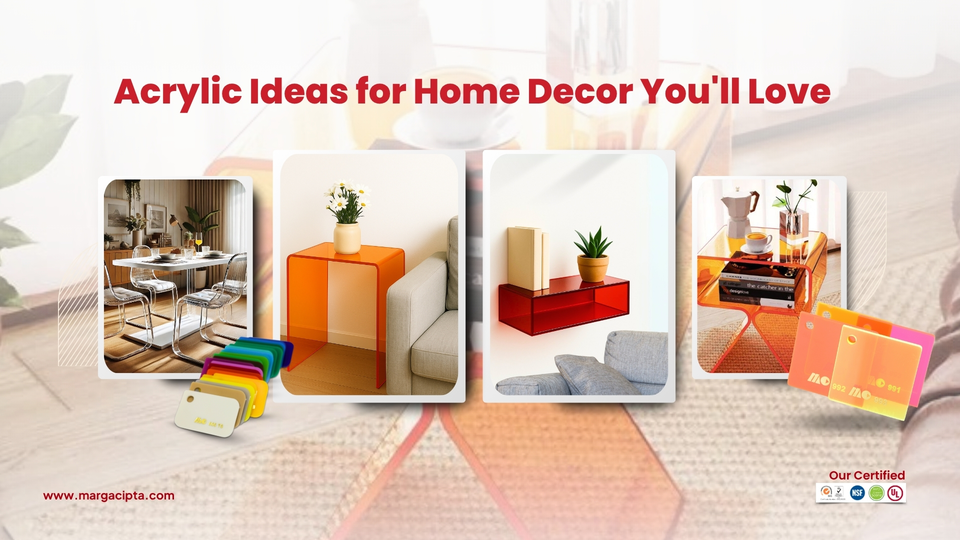
Acrylic Ideas for Home Decor You'll Love

Informational

Beyond the usual tables and chairs, there are unique acrylic ideas for home decor you’ve never thought of, and they might just inspire your next project.

Looking for a way to refresh your home with a modern touch? Acrylic is a versatile material that blends durability with style, making it a perfect choice for interior design. 

Check some acrylic ideas that you might want to create. 

1. Acrylic Floating Shelves

Clear acrylic shelves create a sleek, minimalist look while making your walls appear more spacious. They’re perfect for displaying books, plants, or collectibles without adding visual clutter.

Read also: Things to Check Before Buying Acrylic

2. Acrylic Coffee Table with a Twist

Try a round or geometric-shaped acrylic coffee table to give your living room a modern, airy vibe. The transparency makes even small spaces feel larger.

3. Wall Art with Acrylic Panels

Acrylic sheets can be transformed into colorful, layered wall art. Add paint, prints, or engravings to create a bold statement piece that instantly upgrades your room.

4. Acrylic Frames for a Gallery Wall

Unlike traditional wooden frames, acrylic photo frames offer a contemporary edge. Use them to create a gallery wall that feels light, modern, and easy to update over time.

5. Acrylic Lamp Stands and Lighting

Acrylic is perfect for diffusing light softly, making it ideal for lamp bases or creative lighting fixtures. It adds a stylish glow to bedrooms, living rooms, or even workspaces.

Read also: Does Acrylic Shatter? Find Out Its Strength and Durability

6. DIY Acrylic Accessories

From key holders to desk organizers, acrylic can be cut and shaped into practical yet decorative accessories. These little touches add functionality while keeping the aesthetic chic.

7. Acrylic Plant Stands

Combine greenery with modern design by using acrylic plant stands. The transparent look highlights your plants while giving the illusion of floating pots.

Acrylic is more than just a modern material, it’s a design tool that can transform your home.

From shelves and furniture to wall art and accessories, these acrylic ideas for home decor will bring a fresh, stylish, and unique vibe to your space.

PT Margacipta Wirasentosa offers high-quality cast acrylic made from 100% virgin MMA, with NSF-certified options for food contact applications.


News Release

Acrylic Sheet Thickness Guide: How to Choose the Right One

When working with acrylic sheets for your project, whether it's for signage, display units, or protective panels, choosing the right acrylic sheet thickness is just as important as selecting the right color or finish. 

Thickness affects not only the durability and appearance of your acrylic but also how it performs under pressure or load.

In this guide, we’ll walk you through different acrylic sheet thickness options and the types of projects they’re best suited for.

Why Acrylic Sheet Thickness Matters

The thickness of an acrylic sheet determines its strength, rigidity, and suitability for specific uses. 

A sheet that is too thin might bend or crack under stress, while one that’s too thick could be unnecessarily heavy and more costly. 

By understanding how each thickness performs, you can make a more informed decision that balances durability, appearance, and budget.

Read also: Choose the Right Cast Acrylic Color for Your Project

1. Thin Acrylic Sheets (1.5mm–3mm): Lightweight and Flexible

These thin sheets are commonly used for light-duty applications such as brochure holders, menu covers, small signage, DIY crafts, and protective face shields. 

They’re easy to cut and shape, making them ideal for creative and decorative projects that don’t require heavy impact resistance.

However, due to their flexibility, they are not recommended for structures that need to support weight or endure constant handling.

2. Medium Thickness (4.5mm–6mm): Versatile and Sturdy

Acrylic sheets in the mid-range thickness offer a perfect balance between flexibility and strength. This makes them suitable for a wide range of uses, including display cases, retail fixtures, and architectural panels. 

They provide good visual clarity and resistance to breakage, while still being lightweight enough for wall-mounted or suspended designs.

These are often used in interior partitions, desk dividers, or lightboxes, especially when durability and a polished appearance are both priorities.

3. Thick Acrylic Sheets (8mm–12mm): Durable and Impact-Resistant

For applications that require greater structural strength, such as aquarium panels, furniture, shelving, or heavy-duty display stands, thicker acrylic sheets in the 8mm to 12mm range are a solid choice. 

These sheets can withstand more weight and pressure, offering high impact resistance and rigidity.

Thicker sheets also provide better sound insulation and can be used in environments where both functionality and safety are essential.

Read also: Benefits of Using Clear Cast Acrylic Sheet

4. Extra Thick Acrylic (15mm and above): Structural and Architectural Uses

At 15mm or thicker, acrylic sheets are often chosen for architectural glazing, outdoor signage, large installations, and furniture with load-bearing needs. 

These sheets are highly rigid and can serve as structural components or even as an alternative to glass in many applications.

They’re often used in museums, commercial buildings, and high-end retail designs where aesthetics and strength go hand in hand.

How to Choose the Right Thickness for Your Project

To select the right acrylic sheet thickness, here are some things to consider:

  • Weight or pressure the sheet needs to support
  • Installation method (e.g., freestanding, wall-mounted, framed)
  • Environmental exposure (e.g., indoor vs. outdoor)
  • Aesthetic requirements (how polished or sleek it should appear)
  • Budget considerations

If you’re working with lighting, remember that thinner sheets may allow better light transmission, while thicker sheets can give a more diffused and solid look.

Understanding acrylic sheet thickness is crucial for ensuring that your design looks great and performs as expected. 

From delicate crafts to structural installations, choosing the right thickness enhances both the function and lifespan of your acrylic piece.

At Margacipta Wirasentosa, we offer a wide range of acrylic sheet thicknesses tailored for every kind of project.

Need help finding the right acrylic sheet thickness? Contact our team or visit our Instagram for recommendations and high-quality cast acrylic sheets that match your vision.

Things to Check Before Buying Acrylic

Acrylic sheets are widely used in industries such as signage, architecture, furniture, and even food-related applications. But with so many options available, knowing how to choose acrylic sheets is essential to ensure quality, safety, and durability.

1. Decide Between Cast or Extruded Acrylic

There are two main types of acrylic sheets:

  • Cast Acrylic: Known for superior optical clarity and durability, making it ideal for premium applications.
  • Extruded Acrylic: More cost-effective with consistent thickness, great for general purposes.

2. Check Thickness and Size Options

Different projects require different sheet thicknesses and dimensions. Make sure the supplier offers the right size to fit your application needs.

Read also: Choose the Right Cast Acrylic Color for Your Project

3. Evaluate Optical Clarity

High-quality acrylic should be crystal clear, with excellent light transmission similar to glass. Avoid sheets that look cloudy or yellowish, which usually means lower grade acrylic.

4. Consider Durability and Resistance

Choose acrylic that offers impact resistance, UV protection, and weather durability, especially for outdoor use. This ensures long-lasting performance.

5. Look for Certification and Safety Standards

For food displays or hygienic environments, select acrylic sheets that have NSF or FDA certification to guarantee safety in food contact applications.

Read also: Acrylic vs Polycarbonate: Which One Should You Use?

6. Work with a Trusted Supplier

A reputable supplier ensures consistent product quality and adherence to international standards, reducing risks for your projects.

Conclusion

Understanding how to choose acrylic sheets will help you make the best decision for your projects. From material type and thickness to certifications and supplier reliability, every factor matters in achieving the desired results.

Looking for premium acrylic sheets? Marga Cipta is a trusted manufacturer of cast acrylic sheets with NSF-certified options (clear and white opal). Contact us today at info@margacipta.com to find the right acrylic for your needs!

Choose the Right Cast Acrylic Color for Your Project

When working with acrylic sheets, color isn't just about aesthetics, it plays a functional role in enhancing visibility, brand identity, and even light diffusion. 

Among all types of acrylic, cast acrylic sheets stand out for their vibrant color range, clarity, and versatility in various applications.

In this article, let’s explore the different color options available for cast acrylic and how each one is commonly used in industries such as signage, interior design, and product display.

Why Choose Colored Cast Acrylic Sheets?

Cast acrylic is known for its durability, excellent workability, and brilliant color options. 

Unlike extruded acrylic, cast acrylic offers deeper pigmentation, allowing for better light diffusion, UV resistance, and long-term color stability.

Whether you're designing a lightbox, a retail display, or custom decor, the color of your acrylic sheet can influence both function and appearance.

Various Cast Acrylic Colors and Their Common Uses

1. Red Cast Acrylic

Red acrylic sheets are bold, eye-catching, and often used for:

  • LED signage and illuminated logos
  • Emergency signs and alert messages
  • Retail branding to match corporate identity

Thanks to their light-transmitting properties, red acrylic works beautifully when backlit.

2. Orange Cast Acrylic

Orange adds warmth and vibrancy. It’s ideal for:

  • Creative store displays
  • Children’s products or spaces due to its playful tone
  • Event decorations for a fun, energetic feel

Read also: What Is Cast Acrylic Used For? A Closer Look

3. Yellow Cast Acrylic

Bright and energetic, yellow acrylic is perfect for:

  • Directional signage and caution markers
  • Art installations requiring a sunny pop of color
  • Menu boards or display backdrops

4. Green Cast Acrylic

Green symbolizes freshness and balance. It’s commonly used in:

  • Eco-themed displays
  • Interior accents such as partitions or wall decor
  • Hospitality and health branding

5. Blue Cast Acrylic

Calm and professional, blue acrylic suits:

  • Corporate signage
  • Architectural features
  • Exhibition booths and brand walls

Its cool tones offer a sense of trust and reliability.

6. Purple Cast Acrylic

Often associated with creativity and luxury, purple is used in:

  • Boutique signage
  • Cosmetics displays
  • Artistic or promotional installations

It’s a strong choice for niche branding and elegant design.

Read also: Benefits of Using Clear Cast Acrylic Sheet

7. Pink Cast Acrylic

Fun, friendly, and soft, pink acrylic is great for:

  • Beauty product displays
  • Kids' room decor
  • Event props for birthdays, weddings, or launches

Pink offers emotional warmth and visual softness.

8. Clear/Transparent Cast Acrylic

The most versatile option, clear acrylic is ideal for:

  • Protective barriers and sneeze guards
  • Display cases and shelves
  • DIY projects and signage overlays

Its high light transmission and glass-like appearance make it perfect for showcasing products.

9. White Opaque Cast Acrylic

White sheets are commonly used for:

  • Lightboxes and illuminated signs
  • Acrylic boxes for packaging or storage
  • Architectural models and minimalist design features

Opaque white diffuses light beautifully and offers a clean, modern finish.

Choosing the Right Color for Your Application

When selecting a color for your acrylic sheet, consider:

  • Lighting conditions (especially for backlit applications)
  • Brand or thematic color consistency
  • Functionality. For example, warning signs should use red or yellow
  • Visual impact depending on the setting (retail, industrial, personal)

Colored cast acrylic sheets offer endless possibilities for creative and functional applications. Whether you're a designer, fabricator, or business owner, choosing the right acrylic color can enhance the overall effect of your project.

At Margacipta Wirasentosa, we provide high-quality cast acrylic sheets in a wide range of colors, from bold reds to crisp whites, ensuring you have the perfect match for your needs.

Contact our team today or explore our Instagram to explore our color range and find the perfect sheet for your next project.

Cast Acrylic vs Extruded, Which One Is Better?

Acrylic sheets are a popular material in various industries. It is used from signage and interior design to industrial fabrication. 

However, many people struggle to understand the real difference and what to choose between cast acrylic and extruded acrylic for their projects.

While both materials may look similar at first glance, their performance, durability, and manufacturing quality set them apart.

Read more to know the key differences and explain why cast acrylic sheets are often the superior choice.

What is Cast Acrylic Sheet?

Cast acrylic sheet is made by mixing liquid methyl methacrylate monomer (MMA) with initiators and pouring it into a mold. This process allows the sheet to cure slowly, resulting in a high-quality finish and consistent thickness.

Advantages of Cast Acrylic

  • Higher optical clarity: Make it excellent for display cases and premium applications.
  • Greater chemical resistance: Ideal for laboratories or environments with exposure to solvents.
  • Easier to fabricate: Can be laser cut, machined, and polished with less internal stress.
  • Variety of colors and thicknesses: Better customization options.

Read also: Why Cast Acrylic Is Better Than Glass: Benefits You Should Know

What is Extruded Acrylic Sheet?

Extruded acrylic sheet is manufactured by pushing acrylic resin through a machine into a continuous sheet. This process is faster and more cost-efficient, which makes extruded acrylic widely available and affordable.

Advantages of Extruded Acrylic:

  • Cost-effective: Typically more affordable than cast acrylic.
  • Consistent thickness: Great for applications that require precise dimensions.
  • Good for vacuum forming and thermoforming: Softens faster when heated.
  • Smooth surface: Suitable for printing and general use.

Key Differences at a Glance

Feature

Cast Acrylic Sheet

Extruded Acrylic Sheet

Manufacturing Process

Mold Cast

Machine-extruded

Optical Clarity

Superior

Good

Thickness Tolerance

Slightly less consistent

Highly consistent

Fabrication

Easier to machine and polish

Softer, easier to thermoform

Chemical Resistance

Higher

Lower

Price

Higher

Lower

Which One Should You Choose?

The right acrylic sheet depends on your project needs:

  • Choose cast acrylic if you need superior clarity, better strength, or are doing high-end fabrication or laser cutting.
  • Choose extruded acrylic if you’re working with a tight budget, need consistent sizing, or plan to thermoform the material.

Read also: Choose the Right Cast Acrylic Color for Your Project

At Margacipta Wirasentosa, we provide high-quality cast acrylic sheets tailored for B2B needs. Whether you're producing product displays, signage, furniture, or custom designs, we have the right solution for you.

  • Available in multiple colors & finishes
  • Custom size & cutting options
  • Locally made in Indonesia

Understanding the difference between cast acrylic sheet vs extruded acrylic sheet is essential before starting your next project. Each has its strengths, and choosing the right one can save you time, cost, and effort.

Contact Marga Cipta today or visit our Instagram (@margacipta) for more product details.