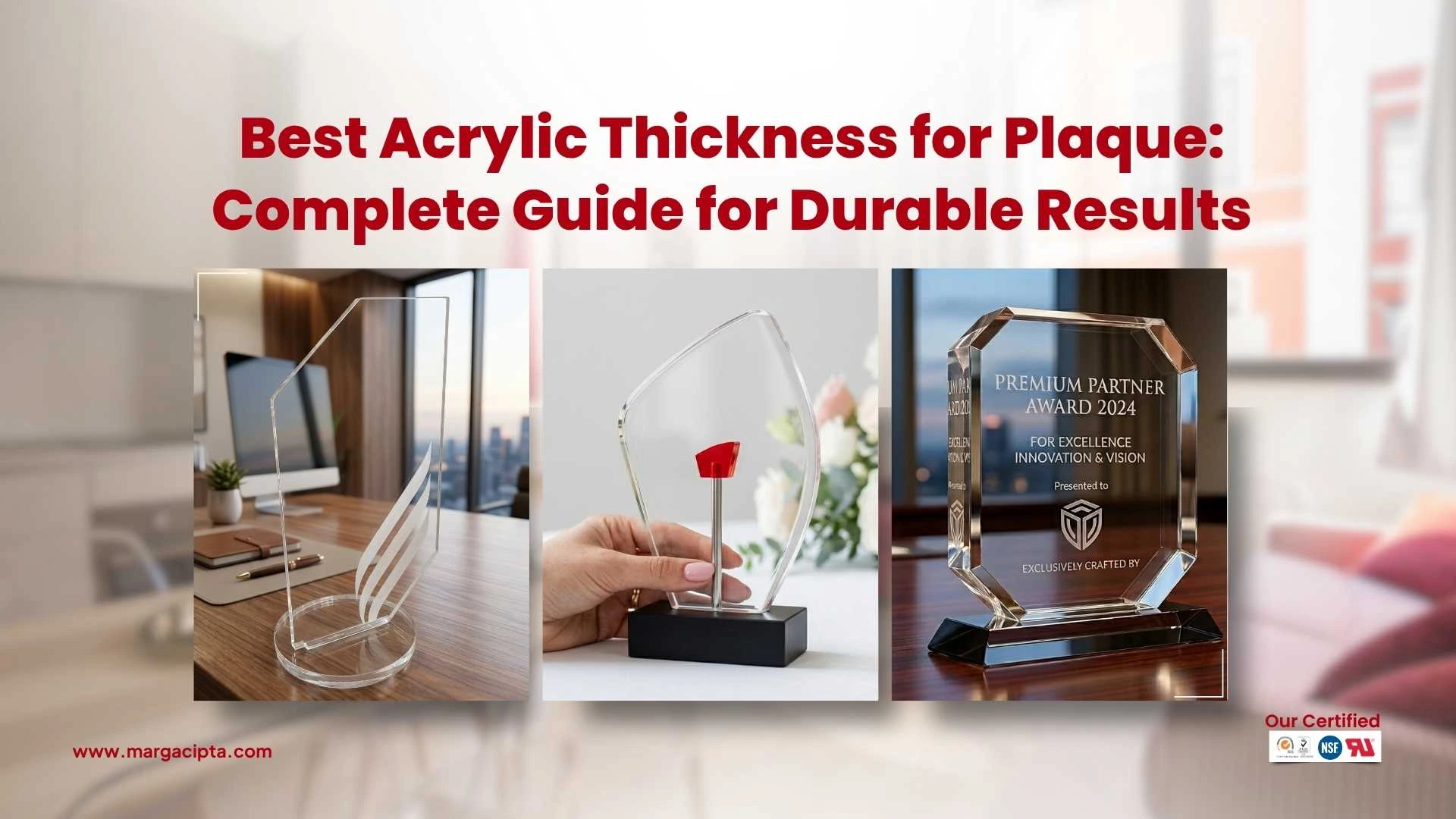
Best Acrylic Thickness for Plaque: Complete Guide for Durable Results

Informational

The best acrylic thickness for plaque is typically between 3 mm and 5 mm.

This range offers the ideal balance between durability, stability, and a clean professional appearance for most applications.

Choosing the right thickness is essential because it directly affects how the plaque looks, feels, and performs over time.

Why Acrylic Thickness Matters

Acrylic plaques are widely used for signage, awards, and displays due to their clarity and modern finish. However, thickness plays a critical role in ensuring the plaque does not bend, crack, or look disproportionate.

  • Too thin → may bend or feel low quality
  • Too thick → looks bulky and increases cost

The goal is to match thickness with the size and purpose of the plaque.

Read also: How to Clean Acrylic Without Scratching

Recommended Thickness Based on Use Case

Here’s a quick guide to help you decide:

3 mm acrylic sheet

  • Best for small plaques, nameplates, or wall-mounted signage.
  • Offers a sleek and lightweight appearance.

4 mm acrylic sheet

  • Ideal for medium-sized plaques that require better rigidity.
  • Commonly used for office signage and branding displays.

5 mm acrylic sheet

  • Suitable for larger plaques or premium applications.
  • Provides a solid, high-end feel with improved durability.

For most commercial and decorative uses, this 3–5 mm range delivers consistent and reliable performance.

Key Factors to Consider

Beyond thickness, several factors influence your final choice:

1. Plaque Size

Larger plaques require thicker acrylic to prevent bending or warping over time.

2. Mounting Method

Wall-mounted plaques can use thinner sheets, while freestanding designs need additional thickness for stability.

3. Design Complexity

Engraving, UV printing, or layered designs may benefit from slightly thicker acrylic for better visual depth.

Fabrication Compatibility

Acrylic sheets are highly compatible with modern fabrication methods such as:

  • Laser cutting
  • UV printing
  • Engraving

Using the correct thickness ensures clean cuts, consistent engraving depth, and a more professional finish.

High-quality acrylic sheets also reduce the risk of chipping or uneven edges during production.

Read also: How to Choose UV Resistant Acrylic Sheets for Outdoor Applications

Why Acrylic is Ideal for Plaques

Compared to other materials, acrylic offers:

  • Excellent clarity (glass-like appearance)
  • Lightweight structure
  • Good impact resistance
  • Easy fabrication

These characteristics make acrylic a practical and scalable material for plaque production.

Material Quality Still Matters

Even with the right thickness, material quality is critical.

High-quality acrylic sheets provide:

  • Consistent thickness
  • Better clarity
  • Improved durability

For businesses, this means fewer production issues and more consistent output.

Marga Cipta supplies premium acrylic sheets designed for fabrication processes, ensuring reliable performance across different applications.

Conclusion

The best acrylic thickness for plaque is generally between 3 mm and 5 mm, depending on size and application.

By choosing the right thickness and using high-quality acrylic sheets, you can achieve plaques that are durable, visually appealing, and professionally finished.


News Release

Thank you for Joining our Booth at FESPA

We had amazing week in FESPA Global Print & European Signs Expo Messe München. We were so excited to showcase our latest products and services, discussing face to face with you during the Fespa Event.

Thank you for joining our booth, we really appreciate your support and look forward to growing together with Marga Cipta family. Vielen Dank für Ihren Besuch an unserem Stand, See you in the next year!


Food Grade Acrylic: Safe Choice for Your F&B Business

When it comes to materials used in the food industry, safety and durability are top priorities. One of the most trusted materials is food grade acrylic

This type of acrylic is specially manufactured to meet strict safety standards, making it suitable for direct contact with food and beverages.

What is Food Grade Acrylic?

Food grade acrylic is a high-quality plastic material that has been tested and certified to be safe for use with food. 

Unlike regular acrylic, it does not contain harmful substances that could contaminate food or drinks. It is also resistant to bacteria, easy to clean, and highly durable.

Read also: Benefits of Using Clear Cast Acrylic Sheet

Is Acrylic Safe for Food?

Yes, acrylic is safe for food as long as it is certified as food grade

Regular acrylic may not always meet safety standards, but food grade acrylic has been tested to ensure it does not leach harmful chemicals or contaminants. 

Always look for products with FDA or NSF certification to guarantee safety in food applications.

Benefits of Using Food Grade Acrylic

  1. Safe for Food Contact
    Certified food grade acrylic complies with international safety standards, ensuring it is non-toxic.
  2. Durable and Long-Lasting
    It is highly resistant to impact and does not easily crack, making it ideal for everyday use in the food industry.
  3. Crystal Clear Transparency
    Glass-like clarity, making food grade acrylic gives excellent visibility, perfect for displays, food containers, or protective covers.
  4. Lightweight and Easy to Handle
    Compared to glass, acrylic is much lighter, making it easier to transport, install, and maintain.

Read also: Do’s and Don’ts: Cleaning Acrylic Sheet the Right Way

Applications of Food Grade Acrylic

Food grade acrylic can be found in various food-related industries, including:

  • Food displays and covers in restaurants and bakeries
  • Storage containers for dry goods or liquids
  • Protective shields for hygienic food preparation areas
  • Tableware and serving trays for commercial or household use

Choosing food grade acrylic ensures safety, durability, and hygiene for any food-related application. 

Looking for high-quality food grade acrylic sheets? MC® Cast Acrylic Sheets are NSF-certified for clear and white opal variants, trusted for consistent quality and safe use in food contact applications.

Contact us on info@margacipta.com for more details.

Things to Check Before Buying Acrylic

Acrylic sheets are widely used in industries such as signage, architecture, furniture, and even food-related applications. But with so many options available, knowing how to choose acrylic sheets is essential to ensure quality, safety, and durability.

1. Decide Between Cast or Extruded Acrylic

There are two main types of acrylic sheets:

  • Cast Acrylic: Known for superior optical clarity and durability, making it ideal for premium applications.
  • Extruded Acrylic: More cost-effective with consistent thickness, great for general purposes.

2. Check Thickness and Size Options

Different projects require different sheet thicknesses and dimensions. Make sure the supplier offers the right size to fit your application needs.

Read also: Choose the Right Cast Acrylic Color for Your Project

3. Evaluate Optical Clarity

High-quality acrylic should be crystal clear, with excellent light transmission similar to glass. Avoid sheets that look cloudy or yellowish, which usually means lower grade acrylic.

4. Consider Durability and Resistance

Choose acrylic that offers impact resistance, UV protection, and weather durability, especially for outdoor use. This ensures long-lasting performance.

5. Look for Certification and Safety Standards

For food displays or hygienic environments, select acrylic sheets that have NSF or FDA certification to guarantee safety in food contact applications.

Read also: Acrylic vs Polycarbonate: Which One Should You Use?

6. Work with a Trusted Supplier

A reputable supplier ensures consistent product quality and adherence to international standards, reducing risks for your projects.

Conclusion

Understanding how to choose acrylic sheets will help you make the best decision for your projects. From material type and thickness to certifications and supplier reliability, every factor matters in achieving the desired results.

Looking for premium acrylic sheets? Marga Cipta is a trusted manufacturer of cast acrylic sheets with NSF-certified options (clear and white opal). Contact us today at info@margacipta.com to find the right acrylic for your needs!

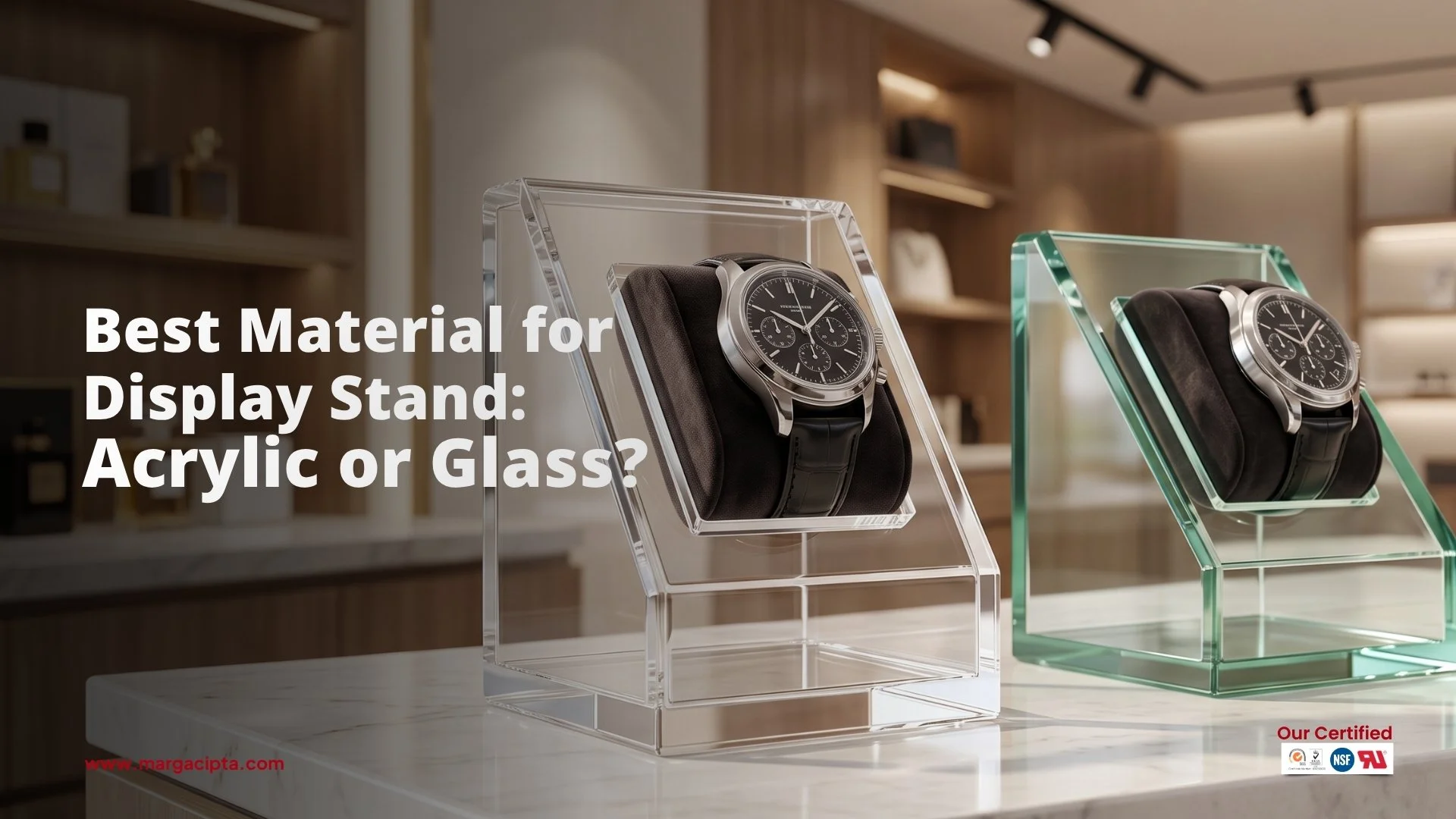
Acrylic Sheet for Display Stand: Best Thickness and Type to Use

Acrylic sheet has become one of the most popular materials for display stands due to its clarity, durability, and versatility. Whether used in retail stores, exhibitions, or offices, choosing the right acrylic sheet for display stand is essential to ensure both aesthetics and functionality.

However, many people still struggle to determine the best thickness and type for their specific needs.

Why Acrylic Sheet is Ideal for Display Stands

Acrylic offers several advantages compared to glass or other materials:

  • High transparency similar to glass but lighter
  • Shatter-resistant and safer to use
  • Easy to fabricate (cutting, bending, engraving)
  • Professional and modern appearance

These qualities make acrylic sheets a top choice for product displays, signage, brochure holders, and more.

Read also: A Step-by-Step Guide on How to Cut Acrylic Sheet Safely

Best Thickness for Acrylic Display Stand

Choosing the right thickness depends on the size and purpose of the display.

Here are common recommendations:

  • 2-3 mm:
    Suitable for small, lightweight displays such as price tags or brochure holders.
  • 4-5 mm:
    Ideal for medium-sized display stands with moderate weight.
  • 6 mm and above:
    Recommended for larger or heavy-duty displays that require extra strength and stability.

Using acrylic that is too thin may cause bending or cracking, while overly thick sheets can increase costs unnecessarily.

Types of Acrylic Sheet

Understanding the different types of acrylic is equally important.

1. Cast Acrylic

  • Higher clarity and premium finish
  • Better for laser cutting and polishing
  • More durable and resistant to chemicals

Best for high-end display stands where appearance matters.

2. Extruded Acrylic

  • More affordable
  • Consistent thickness
  • Easier for mass production

Suitable for standard display applications with budget considerations.

Clear vs Colored Acrylic

  • Clear acrylic: Most common, ideal for showcasing products without distraction
  • Colored acrylic: Adds branding and visual appeal
  • Frosted acrylic: Provides a premium, soft look and reduces glare

The choice depends on branding and display goals.

Read also: How to Choose UV Resistant Acrylic Sheets for Outdoor Applications

Tips for Choosing the Right Acrylic Sheet

To ensure the best result:

  • Match thickness with the load and size of display
  • Choose cast acrylic for premium finishes
  • Consider environment (indoor vs outdoor use)
  • Ensure proper cutting and bending process

Common Mistakes to Avoid

  • Using acrylic that is too thin for heavy products
  • Ignoring surface finish quality
  • Choosing the wrong type for fabrication method

These mistakes can reduce durability and visual impact.

Conclusion

Selecting the right acrylic sheet for the display stand involves balancing thickness, type, and purpose. By understanding these factors, you can create displays that are both durable and visually appealing.

Looking for high-quality acrylic sheets?

Marga Cipta provides a wide range of acrylic sheets with various thicknesses and types, suitable for display stands, signage, and custom applications. Get the right material to elevate your display quality.