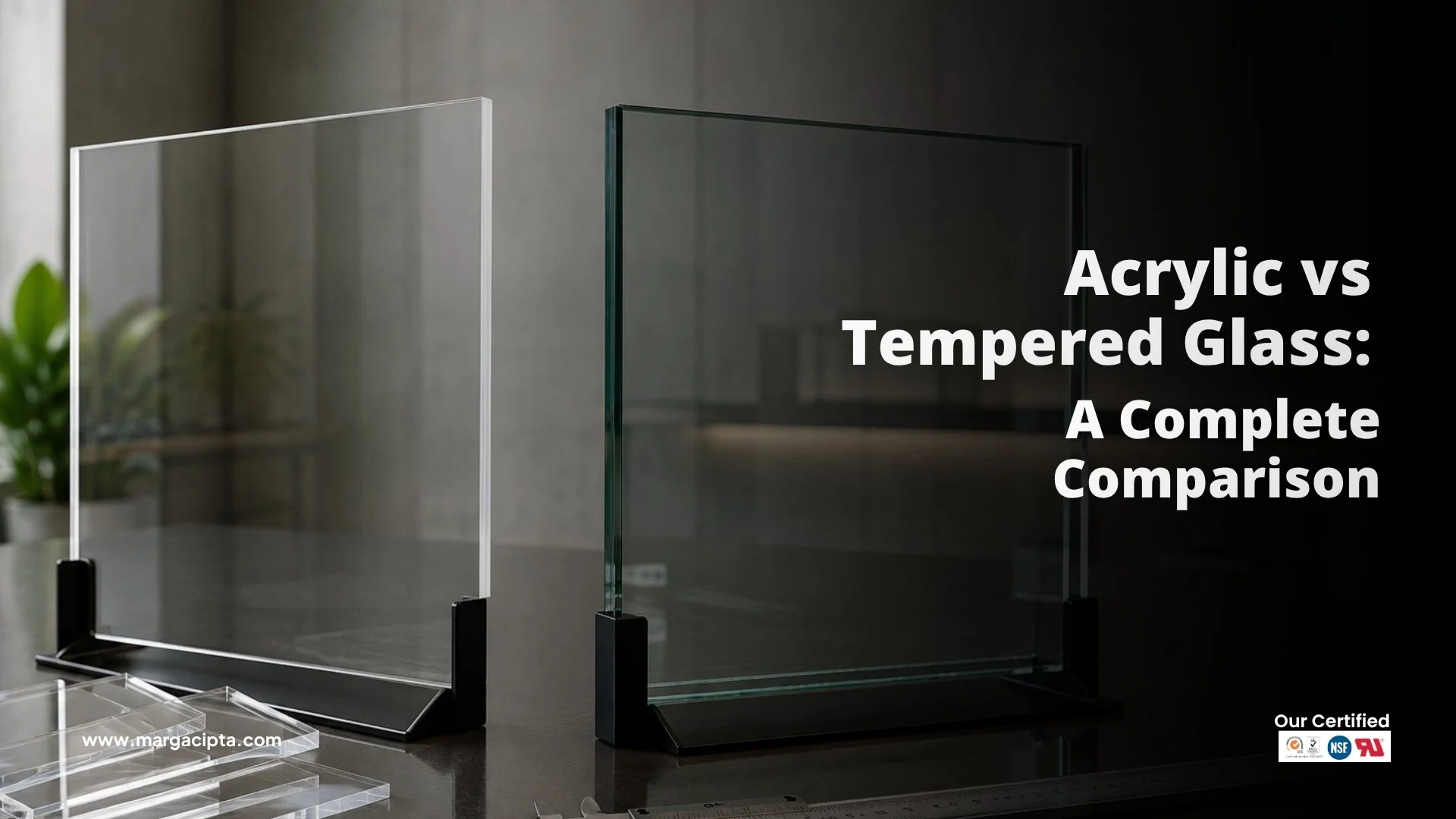
Acrylic vs Tempered Glass: A Complete Comparison

Informational

When comparing acrylic vs tempered glass, acrylic is generally the better choice for applications requiring lightweight construction, design flexibility, and impact resistance, while tempered glass is preferred for environments that demand superior scratch resistance and heat tolerance.

Although both materials offer excellent transparency, they differ significantly in weight, durability, fabrication, and cost. Understanding these differences helps businesses, designers, and fabricators select the most suitable material for their projects.

Acrylic vs Tempered Glass at a Glance

Here's a quick comparison.

Feature Acrylic Tempered Glass
Transparency Excellent Excellent
Weight Lightweight Heavy
Impact Resistance High Moderate
Scratch Resistance Moderate Excellent
Fabrication Easy Limited
Custom Shapes Excellent Difficult
Breakage Less likely to shatter Can shatter into small pieces

Both materials have strengths, but the best option depends on the intended application.

Read also: Best Acrylic Thickness for Ornaments: Size Guide for Perfect Results

Weight

One of acrylic's biggest advantages is its lightweight construction.

Acrylic sheets weigh approximately half as much as glass, making them easier to:

  • Transport
  • Install
  • Handle
  • Fabricate

For large signage, exhibition booths, and retail displays, this weight reduction can significantly lower installation effort and transportation costs.

Impact Resistance

Although tempered glass is much stronger than standard glass, acrylic generally offers higher impact resistance.

If subjected to accidental impact, acrylic is less likely to shatter into fragments.

This makes acrylic suitable for:

  • Retail displays
  • Protective barriers
  • Machine guards
  • Product showcases
  • Public display systems

Optical Clarity

Both materials provide excellent transparency.

Premium cast acrylic offers exceptional optical clarity that closely resembles glass while maintaining a lighter structure.

For many commercial applications, customers experience little visual difference between high-quality acrylic and tempered glass.

Fabrication Flexibility

Acrylic is significantly easier to fabricate.

It can be:

  • Laser cut
  • CNC machined
  • Thermoformed
  • Engraved
  • UV printed
  • Polished

Tempered glass, however, must be cut and processed before the tempering process. Once tempered, it cannot be drilled or reshaped.

This makes acrylic the preferred material for custom fabrication projects.

Cost Considerations

Project cost extends beyond the material price.

Because acrylic is lighter and easier to fabricate, businesses often benefit from:

  • Lower transportation costs
  • Faster installation
  • Reduced breakage risk
  • More affordable customization

These advantages can improve the overall cost efficiency of a project.

Common Applications

Acrylic

Ideal for:

  • Signage
  • Retail displays
  • Exhibition booths
  • Product displays
  • Interior design
  • Decorative panels

Tempered Glass

Commonly used for:

  • Shower enclosures
  • Building windows
  • Glass doors
  • Safety glazing
  • Architectural installations

Read also: Laser Cut Acrylic Sheet: Benefits, Applications, and Design Tips

Why High-Quality Acrylic Matters

The performance of acrylic depends on its quality.

Premium cast acrylic sheets provide:

  • Superior clarity
  • Better weather resistance
  • Consistent thickness
  • Excellent fabrication performance
  • Long-lasting durability

Marga Cipta manufactures premium cast acrylic sheets suitable for signage, displays, architecture, industrial fabrication, and custom projects.

Conclusion

When comparing acrylic vs tempered glass, acrylic offers greater versatility, lighter weight, and easier fabrication, making it the preferred material for many commercial and design applications.

For projects requiring custom fabrication, premium appearance, and long-term performance, high-quality acrylic sheets provide an excellent solution.

Source Premium Acrylic Sheets from Marga Cipta

Marga Cipta supplies premium cast acrylic sheets in various thicknesses, colors, and finishes for signage, displays, architectural projects, and custom fabrication.

For inquiries or orders, email info@margacipta.com.

For product updates, inspiration, and application ideas, follow Instagram @margacipta.


News Release

Laser Cut Acrylic Sheet: Benefits, Applications, and Design Tips

Laser cut acrylic sheet is widely used because it delivers clean edges, precise cuts, and exceptional design flexibility. 

From retail displays and signage to decorative products and industrial components, laser cutting allows acrylic sheets to be fabricated into intricate shapes with high accuracy.

Its precision and efficiency make laser cutting one of the most popular fabrication methods for acrylic.

What Is Laser Cutting?

Laser cutting is a fabrication process that uses a focused laser beam to cut acrylic sheets with exceptional precision.

The concentrated heat melts and vaporizes the material along the cutting path, producing smooth edges that often require minimal finishing.

This method is suitable for both simple shapes and highly detailed designs.

Read also: Acrylic Sheet for Menu Holders: Durable Display Solutions

Benefits of Laser Cut Acrylic Sheet

1. High Precision

Laser cutting can produce complex patterns and intricate details with consistent accuracy.

This makes it ideal for custom products and decorative applications.

2. Smooth, Polished Edges

One of the biggest advantages of laser cutting is the clean edge finish.

High-quality acrylic sheets often produce polished edges directly from the cutting process, reducing the need for additional finishing.

3. Efficient Production

Laser cutting supports both prototype development and large-scale manufacturing.

Its automation capabilities help improve productivity while maintaining consistent quality.

4. Design Flexibility

Laser-cut acrylic can accommodate a wide range of creative and functional designs, from simple geometric shapes to intricate decorative patterns.

Common Applications

Laser-cut acrylic sheets are widely used across various industries. Popular applications include:

1. Signage

Custom business signs, illuminated letters, and branding elements.

2. Retail Displays

Product stands, display cases, shelf organizers, and promotional fixtures.

3. Decorative Products

Wall décor, ornaments, cake toppers, and personalized gifts.

4. Office and Commercial Displays

Directory signs, information boards, and nameplates.

5. Industrial Components

Machine covers, protective panels, and fabricated plastic parts.

Design Tips for Better Results

To maximize laser cutting quality, consider the following:

1. Choose the Right Thickness

Different applications require different acrylic thicknesses to balance durability and precision.

2. Use High-Quality Acrylic

Premium acrylic sheets typically produce cleaner cuts and smoother edges.

3. Optimize Design Files

Vector-based artwork helps ensure accurate cutting and consistent production.

4. Consider Material Finish

Clear, colored, satin, frosted, and mirrored acrylic each create different visual effects in finished products.

Why Material Quality Matters

Laser cutting results depend not only on the machine but also on the quality of the acrylic sheet. High-quality acrylic offers:

  • Better cutting consistency
  • Cleaner polished edges
  • Reduced risk of defects
  • Improved dimensional accuracy
  • More professional final appearance

Marga Cipta supplies premium acrylic sheets suitable for laser cutting, engraving, CNC machining, and other fabrication applications.

Read also: What Acrylic to Use for Cake Topper: A Complete Material Guide

Conclusion

Laser cut acrylic sheet combines precision, efficiency, and design flexibility, making it one of the best fabrication solutions for modern acrylic products.

Whether you're creating signage, retail displays, decorative items, or custom components, using high-quality acrylic sheets helps ensure clean cuts and professional results.

Marga Cipta offers premium acrylic sheets in various thicknesses, colors, and finishes for laser cutting and custom fabrication projects.

For inquiries or orders, email info@margacipta.com.

For product information, inspiration, and the latest updates, follow Instagram @margacipta.

What Is Acrylic Made Of? Composition, Properties, and Uses Explained

Acrylic is made from polymethyl methacrylate (PMMA), a transparent thermoplastic created from methyl methacrylate (MMA) monomers. This material is known for its excellent clarity, durability, and versatility, making it one of the most widely used alternatives to glass.

From signage and displays to architectural and industrial applications, acrylic sheets are valued for their combination of strength, aesthetics, and ease of fabrication.

Understanding what acrylic is made of can help businesses, designers, and manufacturers choose the right material for their projects.

Read also: What is Satin Acrylic? A Complete Guide to Its Look and Function

What Is Acrylic?

Acrylic is a synthetic plastic material that belongs to the family of thermoplastics. The most common form of acrylic used in sheets is PMMA, which is produced through a polymerization process.

During manufacturing, small molecules called methyl methacrylate monomers are chemically bonded together to form long polymer chains. The result is a strong, transparent material with excellent optical properties.

Because of its glass-like appearance and practical advantages, acrylic has become a popular material in various industries.

Main Components of Acrylic

The primary ingredient in acrylic is:

Polymethyl Methacrylate (PMMA)

PMMA is a transparent plastic that offers:

  • High optical clarity
  • Good weather resistance
  • Lightweight performance
  • Excellent fabrication flexibility

This composition gives acrylic its distinctive combination of transparency and durability.

Depending on the manufacturing process, additives may also be incorporated to enhance specific properties such as UV resistance, color stability, or surface finish.

Key Properties of Acrylic

One of the reasons acrylic is so widely used is its unique set of material properties.

Excellent Clarity

Acrylic offers outstanding light transmission, allowing it to achieve a clear and bright appearance. This makes it ideal for applications where visibility is important.

Lightweight Structure

Compared to glass, acrylic is significantly lighter, making transportation, installation, and fabrication easier.

Weather Resistance

High-quality acrylic sheets can withstand prolonged exposure to sunlight and outdoor conditions while maintaining their appearance.

Impact Resistance

Although not as impact-resistant as polycarbonate, acrylic is generally stronger and more durable than traditional glass.

Easy Fabrication

Acrylic can be cut, drilled, engraved, thermoformed, and printed, making it suitable for a wide range of custom projects.

Common Types of Acrylic Sheets

Acrylic sheets are available in various forms, including:

  • Clear acrylic sheets
  • Colored acrylic sheets
  • Frosted acrylic sheets
  • Satin acrylic sheets
  • Mirrored acrylic sheets

Each type is designed to meet different aesthetic and functional requirements.

Common Uses of Acrylic

Because of its versatility, acrylic is used in numerous applications.

Popular examples include:

1. Signage and Displays

Acrylic's clarity and printability make it a preferred material for retail and commercial signage.

2. Interior Design

Decorative panels, partitions, and furniture elements often utilize acrylic for its modern appearance.

3. Industrial Applications

Many industries use acrylic for machine guards, protective covers, and fabricated components.

4. Architectural Features

Acrylic is frequently incorporated into building designs, skylights, and decorative structures.

Read also: Is Acrylic Waterproof? Understanding Its Water Resistance

Why Material Quality Matters

Not all acrylic sheets offer the same performance.

High-quality acrylic provides:

  • Better clarity
  • Consistent thickness
  • Improved weather resistance
  • Reliable fabrication results

Marga Cipta supplies premium acrylic sheets suitable for signage, displays, interiors, fabrication, and industrial applications.

Conclusion

So, what is acrylic made of? Acrylic is primarily composed of polymethyl methacrylate (PMMA), a transparent thermoplastic known for its durability, clarity, and versatility.

Its unique composition allows it to be used across a wide range of industries and applications. By choosing high-quality acrylic sheets, businesses and manufacturers can achieve reliable performance and professional results.

Ready to explore our cast acrylic options? At Margacipta Wirasentosa, we offer high-quality clear cast acrylic sheets from 100% virgin MMA in various thicknesses and custom sizes to fit your needs.

Reach out to our Instagram or download our Product Catalog for more information.

Introduction to Margacipta Cast Acrylic Sheet Factory

Introduction to Margacipta Cast Acrylic Sheet Factory

Margacipta is a leading manufacturer of cast acrylic sheets, renowned for its commitment to quality, innovation, and sustainability. With state-of-the-art facilities and a dedicated team of professionals, Margacipta has established itself as a trusted supplier in the industry.

Manufacturing Process at Margacipta

At Margacipta, the manufacturing process begins with the careful selection of raw materials. Only the highest quality methyl methacrylate (MMA) and polymethyl methacrylate (PMMA) pellets are used, ensuring superior performance and durability.

Advantages of Margacipta Cast Acrylic Sheets

Margacipta cast acrylic sheets offer numerous advantages over other materials. Their exceptional clarity, scratch resistance, and UV stability make them ideal for a wide range of applications. Additionally, Margacipta's commitment to environmental consciousness ensures that its products are not only high-quality but also sustainable.

Applications of Margacipta Cast Acrylic Sheets

Margacipta cast acrylic sheets are used in various industries, including architectural glazing, signage and displays, and the automotive industry. Their versatility and aesthetic appeal make them a popular choice for designers and manufacturers seeking reliable and cost-effective solutions.

Challenges Faced by Margacipta

Despite its success, Margacipta faces challenges such as market competition, rapid technological advancements, and fluctuations in raw material sourcing. However, with its dedication to innovation and continuous improvement, Margacipta is well-positioned to overcome these challenges and thrive in the industry.

Future Prospects of Margacipta

The future looks promising for Margacipta, with growing demand for high-quality cast acrylic sheets worldwide. As the industry evolves and new opportunities emerge, Margacipta remains committed to delivering innovative solutions that meet the needs of its customers and contribute to sustainable development.

Conclusion

In conclusion, Margacipta is a leading manufacturer of cast acrylic sheets, known for its commitment to quality, innovation, and sustainability. With its advanced manufacturing processes, superior products, and dedication to environmental consciousness, Margacipta is poised for continued success in the years to come.


How to Drill Acrylic Sheet Safely: A Complete Beginner's Guide

The safest way to drill acrylic sheet is by using the correct drill bit, applying light pressure, and supporting the material properly to prevent cracking or chipping. 

Whether you're fabricating signage, display stands, furniture, or decorative products, proper drilling techniques help achieve clean, accurate holes while preserving the quality of the acrylic.

Fortunately, drilling acrylic is straightforward when the right tools and methods are used.

Can You Drill Acrylic Sheet?

Yes. Acrylic sheets can be drilled successfully using standard drilling equipment, provided the correct technique is followed.

Unlike glass, acrylic is easier to machine and fabricate. However, improper drilling can create stress that leads to cracks or chipped edges.

Using suitable tools and maintaining proper drilling speed greatly reduces these risks.

Read also: Why Does Acrylic Turn Yellow? Causes and Prevention

Tools You'll Need

Before starting, prepare the following:

  • Power drill or drill press
  • Acrylic-compatible drill bit
  • Clamps
  • Wooden backing board
  • Safety glasses
  • Measuring tools and marker

A stable setup helps improve drilling accuracy and protects the acrylic during the process.

Step 1: Mark the Hole Location

Measure carefully and mark the drilling point.

Using masking tape over the drilling area can help improve visibility and reduce surface chipping.

Step 2: Support the Acrylic

Place the acrylic sheet on a flat wooden backing board.

This supports the material and minimizes vibration while drilling.

Never drill acrylic while it is unsupported.

Step 3: Use the Correct Drill Bit

Using an appropriate drill bit is one of the most important factors in preventing cracks.

Specialized acrylic drill bits or modified plastic drill bits typically produce cleaner holes than standard metal drill bits.

Sharp tools also help reduce stress on the material.

Step 4: Drill Slowly

Apply gentle, consistent pressure while maintaining a moderate drilling speed.

Avoid forcing the drill through the acrylic.

Allow the drill bit to remove material gradually rather than generating excessive heat.

Step 5: Finish Carefully

As the drill bit approaches the exit side of the acrylic, reduce pressure even further.

This helps prevent chipping when the hole is completed.

After drilling, remove any dust and inspect the hole for smoothness.

Common Mistakes to Avoid

Many acrylic drilling problems can be prevented by avoiding these common mistakes:

  • Drilling too quickly
  • Applying excessive pressure
  • Using dull drill bits
  • Skipping the backing board
  • Drilling too close to the sheet edge
  • Using damaged or low-quality acrylic

Careful preparation greatly improves the final result.

Why High-Quality Acrylic Matters

Material quality influences fabrication performance.

Premium cast acrylic sheets generally provide:

  • Consistent thickness
  • Better machining characteristics
  • Cleaner drilling results
  • Reduced risk of cracking
  • Professional-quality finishes

Marga Cipta manufactures premium cast acrylic sheets suitable for drilling, laser cutting, CNC machining, engraving, and custom fabrication.

Read also: Laser Cut Acrylic Sheet: Benefits, Applications, and Design Tips

Conclusion

Learning how to drill acrylic sheet safely helps prevent cracks while producing clean and accurate holes for fabrication projects.

By using the right drill bit, supporting the material properly, and drilling at a controlled speed, both beginners and professionals can achieve reliable, high-quality results.

Fabricate with Confidence Using Marga Cipta Acrylic

Marga Cipta offers premium cast acrylic sheets designed for machining, drilling, laser cutting, engraving, and custom fabrication.

For inquiries or orders, email info@margacipta.com.

For product information, inspiration, and the latest updates, follow Instagram @margacipta.