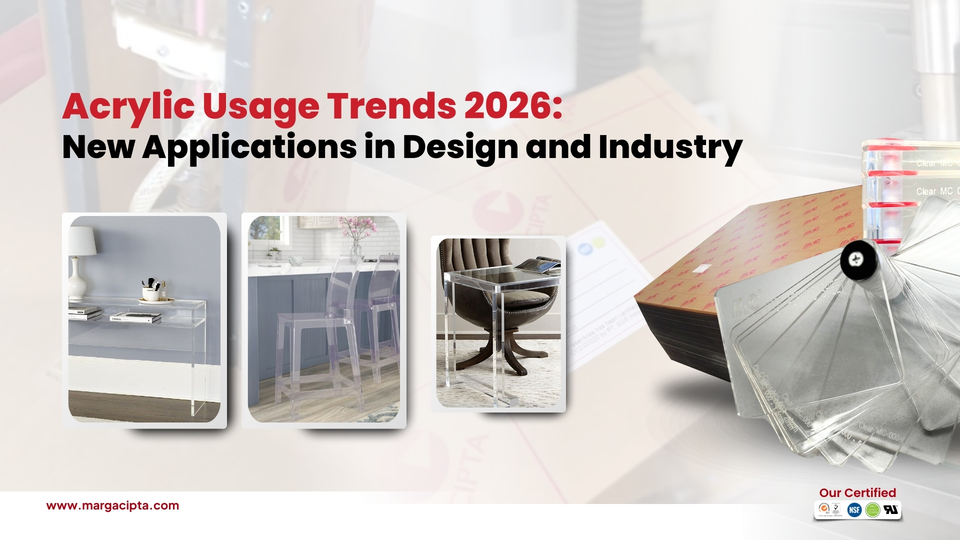
Acrylic Usage Trends 2026: New Applications in Design and Industry

Informational

Acrylic continues to gain momentum as one of the most versatile materials across design, construction, and manufacturing industries. Known for being lightweight, strong, highly transparent, and easy to fabricate, acrylic is increasingly replacing traditional materials such as glass and metal.

As we move into 2026, acrylic is no longer limited to signage or displays. Its applications are expanding rapidly, opening new opportunities for businesses, designers, architects, and manufacturers. Below are the key acrylic usage trends predicted to shape design and industry in 2026.

Trend 1: Acrylic Interior Panels

One of the strongest acrylic usage trends in 2026 is the rise of acrylic interior panels for both commercial and residential buildings.

Why this trend is growing:

The rapid development of offices, retail spaces, hotels, and modern housing has increased demand for materials that are visually appealing, durable, and cost-efficient. Acrylic interior panels offer high clarity and a sleek, minimalistic look, making them ideal for partitions, wall panels, and decorative elements.

Compared to glass, acrylic is more affordable, lighter, and easier to install. Designers and architects also favor acrylic for its flexibility in color, thickness, and finish, allowing them to create modern interior concepts without compromising safety or aesthetics.

Read also: 100% Virgin MMA: The Key to High-Quality Acrylic Sheets

Trend 2: LED Signage and Display Systems

LED signage remains one of the most dominant acrylic applications heading into 2026.

Why this trend continues to rise:

Offline retail transformation is still strong, particularly in developing markets where physical stores continue to evolve. Many small and medium-sized businesses are renovating storefronts and upgrading visual branding, increasing demand for LED signage and display systems.

Acrylic is the preferred material for LED signage due to its excellent light transmission, smooth surface, and ability to diffuse light evenly. From illuminated logos and lightboxes to promotional displays, acrylic helps businesses create brighter, more attractive visual communication.

Trend 3: Acrylic Greenhouse Panels

Sustainability and food security are driving the growth of urban farming, hydroponics, and smart agriculture—making acrylic greenhouse panels a key trend in 2026.

Why this trend is emerging:

Acrylic offers superior UV resistance, high transparency, and better impact strength compared to glass. These properties make it ideal for greenhouse roofs and walls, where consistent light transmission and durability are essential.

As urban farming expands into rooftops, compact land areas, and controlled environments, acrylic greenhouse panels provide a long-lasting, lightweight solution that supports plant growth while reducing maintenance costs.

Read also: Food Grade Acrylic: Safe Choice for Your F&B Business

Trend 4: Furniture, Home Décor, and Small Products

Acrylic furniture and decorative items are gaining popularity, influenced heavily by social media-driven interior trends.

Why this trend is accelerating:

Clean, modern, and minimalist interiors are in high demand, and acrylic fits perfectly into this aesthetic. Furniture such as acrylic chairs, tables, shelves, and decorative panels offers a contemporary look without making spaces feel heavy.

In addition, e-commerce sellers increasingly use acrylic for DIY products and small household items. Consumers prefer materials that are lightweight, modern, durable, and visually appealing—qualities that acrylic delivers consistently.

Acrylic: A Material with Expanding Relevance

The versatility of acrylic makes it increasingly relevant across industries beyond traditional applications. From architecture and retail to agriculture and lifestyle products, acrylic continues to adapt to changing market needs.

To support these growing demands, choosing a high-quality material is essential. MC® Cast Acrylic Sheet is a proven solution, offering consistent clarity, strength, and fabrication performance for both design and industrial applications.

Conclusion

Acrylic usage trends in 2026 highlight a clear shift toward materials that combine aesthetics, durability, and flexibility. Interior panels, LED signage, greenhouse systems, and furniture are just a few examples of how acrylic is shaping the future of design and industry.

By leveraging reliable materials like MC® Cast Acrylic Sheet, businesses can stay ahead of trends and unlock new opportunities in an evolving market.


News Release

What is Satin Acrylic? A Complete Guide to Its Look and Function

Satin acrylic is a type of acrylic sheet with a smooth matte surface that reduces glare while maintaining a clean and premium appearance.

It is commonly used for signage, interior design, displays, and decorative applications where a softer visual finish is preferred over high gloss.

Compared to standard glossy acrylic, satin acrylic provides a more subtle and elegant look while still offering the durability and fabrication flexibility of acrylic material.

What Makes Satin Acrylic Different?

The main difference between satin acrylic and regular acrylic lies in the surface finish.

Standard acrylic sheets usually have a glossy, reflective appearance. Satin acrylic, on the other hand, features a matte or low-sheen surface that diffuses light more evenly.

This creates:

  • Reduced reflections
  • Softer visual appearance
  • Better fingerprint resistance
  • More modern aesthetic

Because of these characteristics, satin acrylic is often selected for projects that require a premium and minimalistic look.

Read also: Best Acrylic Thickness for Ornaments: Size Guide for Perfect Results

Key Features of Satin Acrylic

Satin acrylic combines aesthetics with practical functionality.

Some of its main advantages include:

1. Reduced Glare

The matte surface helps minimize light reflection, making it suitable for brightly lit spaces.

2. Elegant Appearance

Its smooth satin finish creates a sophisticated and modern visual effect.

3. Better Fingerprint Resistance

Compared to glossy acrylic, fingerprints and smudges are less visible on satin surfaces.

4. Lightweight and Durable

Like other acrylic sheets, satin acrylic remains lightweight while offering good impact resistance.

Common Applications of Satin Acrylic

Satin acrylic is widely used across commercial and decorative industries.

Popular applications include:

  • Interior signage
  • Office branding panels
  • Decorative wall elements
  • Retail displays
  • Furniture accents
  • Partitions and privacy panels

Its clean appearance makes it especially popular for modern architectural and interior concepts.

Satin Acrylic vs Glossy Acrylic

Both materials offer unique advantages depending on the intended use.

Satin Acrylic

  • Matte appearance
  • Softer reflections
  • Premium minimal look
  • Better for modern interiors

Glossy Acrylic

  • Highly reflective finish
  • Stronger color vibrancy
  • More transparent appearance
  • Suitable for bold visual displays

The choice depends on whether the project prioritizes subtle elegance or vibrant visual impact.

Fabrication Compatibility

Satin acrylic sheets are compatible with various fabrication methods such as:

  • Laser cutting
  • CNC cutting
  • UV printing
  • Engraving

High-quality satin acrylic helps ensure:

  • Clean cutting results
  • Consistent surface texture
  • Better finishing quality

Proper handling during fabrication is important to preserve the matte surface appearance.

Read also: Best Acrylic Thickness for Plaque: Complete Guide for Durable Results

Why Material Quality Matters

Not all satin acrylic sheets deliver the same finish and consistency.

Premium-quality acrylic offers:

  • Uniform satin texture
  • Consistent thickness
  • Better durability during processing

For businesses and manufacturers, using high-quality materials helps improve production efficiency and final product appearance.

Marga Cipta supplies high-quality acrylic sheets in various finishes, including satin acrylic for fabrication and decorative applications.

Conclusion

Satin acrylic is an excellent material choice for projects that require a modern, elegant, and low-glare appearance.

With its matte finish, durability, and fabrication flexibility, satin acrylic is widely used for signage, interiors, and decorative applications. Choosing high-quality acrylic sheets helps ensure more professional and visually consistent results.

Ready to explore our cast acrylic options? At Margacipta Wirasentosa, we offer high-quality clear cast acrylic sheets from 100% virgin MMA in various thicknesses and custom sizes to fit your needs.

Reach out to our Instagram or download our Product Catalog for more information.

Create The Perfect Barrier Gate With Cast Acrylic Sheet

Are you looking for a new, unique, and attractive barrier gate? Our MC® Cast Acrylic Sheet is the solution. 

MC® Cast Acrylic Sheet are a high-quality acrylic sheet that is designed to be used as a barrier gate. The MC® Cast Acrylic Sheet is made from high-quality material, making it durable and lightweight. It is 100% safer than glass and impact resistant.


The MC® Cast Acrylic Sheet has various colors and blocks that you can choose from when designing your barrier gate.  Our products have been used in many industries such as hotels, offices, hospitals, and schools and many more.

Features :

  • Lightweight yet strong and  easy to install
  • 100% safer than a glass
  • impact resistant
  • shatterproof
  • anti scratch
  • no maintenance required
  • long lasting durability
  • easy to clean
  • can withstand any weather condition without cracking or fading color
  • no need for maintenance at all
  • Can be used indoors or outdoors


Create the perfect barrier gate with Cast Acrylic Sheet by Marga Cipta!

If you have any questions about our products or services, please feel free to contact us at any time!
 

Best Acrylic Thickness for Plaque: Complete Guide for Durable Results

The best acrylic thickness for plaque is typically between 3 mm and 5 mm.

This range offers the ideal balance between durability, stability, and a clean professional appearance for most applications.

Choosing the right thickness is essential because it directly affects how the plaque looks, feels, and performs over time.

Why Acrylic Thickness Matters

Acrylic plaques are widely used for signage, awards, and displays due to their clarity and modern finish. However, thickness plays a critical role in ensuring the plaque does not bend, crack, or look disproportionate.

  • Too thin → may bend or feel low quality
  • Too thick → looks bulky and increases cost

The goal is to match thickness with the size and purpose of the plaque.

Read also: How to Clean Acrylic Without Scratching

Recommended Thickness Based on Use Case

Here’s a quick guide to help you decide:

3 mm acrylic sheet

  • Best for small plaques, nameplates, or wall-mounted signage.
  • Offers a sleek and lightweight appearance.

4 mm acrylic sheet

  • Ideal for medium-sized plaques that require better rigidity.
  • Commonly used for office signage and branding displays.

5 mm acrylic sheet

  • Suitable for larger plaques or premium applications.
  • Provides a solid, high-end feel with improved durability.

For most commercial and decorative uses, this 3–5 mm range delivers consistent and reliable performance.

Key Factors to Consider

Beyond thickness, several factors influence your final choice:

1. Plaque Size

Larger plaques require thicker acrylic to prevent bending or warping over time.

2. Mounting Method

Wall-mounted plaques can use thinner sheets, while freestanding designs need additional thickness for stability.

3. Design Complexity

Engraving, UV printing, or layered designs may benefit from slightly thicker acrylic for better visual depth.

Fabrication Compatibility

Acrylic sheets are highly compatible with modern fabrication methods such as:

  • Laser cutting
  • UV printing
  • Engraving

Using the correct thickness ensures clean cuts, consistent engraving depth, and a more professional finish.

High-quality acrylic sheets also reduce the risk of chipping or uneven edges during production.

Read also: How to Choose UV Resistant Acrylic Sheets for Outdoor Applications

Why Acrylic is Ideal for Plaques

Compared to other materials, acrylic offers:

  • Excellent clarity (glass-like appearance)
  • Lightweight structure
  • Good impact resistance
  • Easy fabrication

These characteristics make acrylic a practical and scalable material for plaque production.

Material Quality Still Matters

Even with the right thickness, material quality is critical.

High-quality acrylic sheets provide:

  • Consistent thickness
  • Better clarity
  • Improved durability

For businesses, this means fewer production issues and more consistent output.

Marga Cipta supplies premium acrylic sheets designed for fabrication processes, ensuring reliable performance across different applications.

Conclusion

The best acrylic thickness for plaque is generally between 3 mm and 5 mm, depending on size and application.

By choosing the right thickness and using high-quality acrylic sheets, you can achieve plaques that are durable, visually appealing, and professionally finished.

How to Clean Acrylic Without Scratching

Acrylic is a popular material used in signage, displays, furniture, and protective panels due to its clarity and lightweight properties. However, cleaning acrylic requires special care. If done incorrectly, it can easily get scratched, reducing its visual quality.

In this guide, we will show you how to clean acrylic without scratching so you can maintain its clarity and extend its lifespan.

1. Remove Dust Before Cleaning

Before applying any liquid cleaner, always remove dust and loose particles from the surface. Dust can act like abrasive material and cause scratches when wiped.

Use a soft microfiber cloth or a gentle air blower to remove debris. Avoid using rough fabrics or paper towels, as they can damage the surface.

Read also: Benefits of Using Clear Cast Acrylic Sheet

2. Use the Right Cleaning Solution

Choosing the correct cleaning solution is crucial. Avoid using glass cleaners that contain ammonia or alcohol, as these chemicals can damage acrylic and cause it to become cloudy.

Instead, use a mild soap mixed with water or a specialized acrylic cleaner. This ensures that the surface remains clear and undamaged.

3. Clean with a Soft Cloth

Always use a clean, soft microfiber cloth when wiping acrylic. Gently wipe the surface without applying too much pressure.

Use a dabbing or light wiping motion rather than scrubbing. Scrubbing can create fine scratches that are difficult to remove.

4. Avoid Circular Motions

While it may feel natural to wipe in circles, this method can create visible swirl marks on acrylic surfaces.

Instead, clean in straight lines, preferably in one direction. This helps maintain a smooth and uniform finish.

5. Dry Properly

After cleaning, dry the acrylic with a separate dry microfiber cloth. This prevents water spots and streaks from forming.

Make sure the cloth is clean and free from dirt to avoid reintroducing particles onto the surface.

6. Handle with Care

Prevention is just as important as cleaning. Avoid placing sharp or rough objects directly on acrylic surfaces.

If the acrylic is used in high-contact areas, consider adding a protective coating or cover to reduce the risk of scratches.

Read also: Does Acrylic Shatter? Find Out Its Strength and Durability

7. What to Avoid

To keep acrylic in the best condition, avoid the following:

  • Paper towels or rough cloths
  • Ammonia-based cleaners
  • Alcohol or solvent-based products
  • Excessive pressure while cleaning

Conclusion

Knowing how to clean acrylic without scratching is essential to maintaining its clarity and appearance. By using the right tools and techniques, you can keep your acrylic surfaces looking new for a long time.

Simple habits such as using microfiber cloths, avoiding harsh chemicals, and cleaning gently can make a significant difference in preserving the quality of acrylic.

Ready to explore your clear cast acrylic options? At Margacipta Wirasentosa, we offer high-quality clear cast acrylic sheets from 100% virgin MMA in various thicknesses and custom sizes to fit your needs.

Reach to our Instagram or download our Product Catalog for more information.