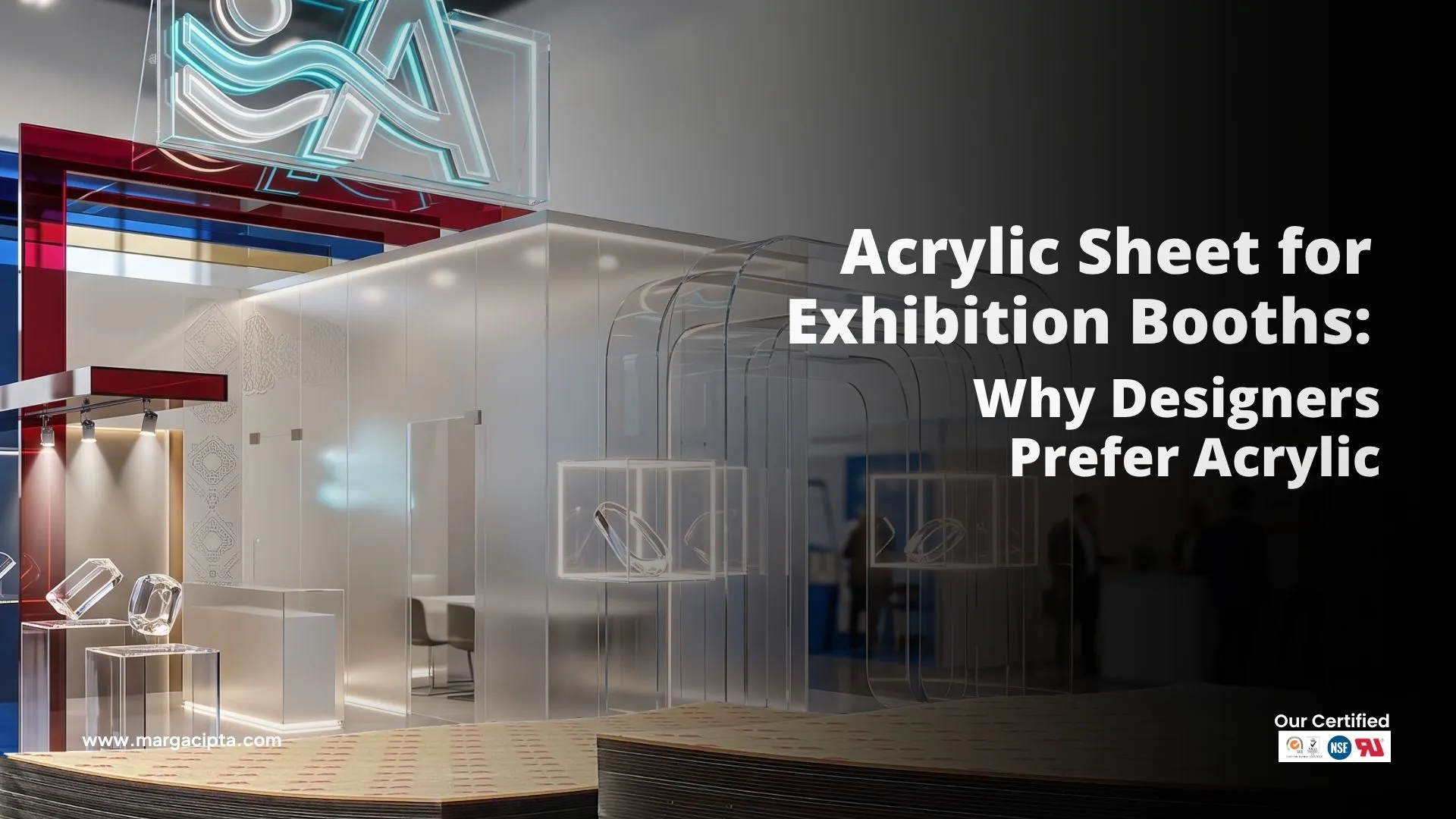
Acrylic Sheet for Exhibition Booths: Why Designers Prefer Acrylic

Informational

Acrylic sheet is one of the most popular materials for exhibition booths because it combines visual appeal, lightweight construction, and fabrication flexibility.

From product displays and illuminated signage to decorative panels and branded installations, acrylic helps designers create exhibition spaces that attract attention and enhance visitor engagement.

Its versatility makes acrylic an ideal material for trade shows, expos, conferences, and promotional events.

Why Acrylic Is Ideal for Exhibition Booths

Exhibition booths need materials that are visually impressive, easy to transport, and durable enough for repeated use.

Acrylic meets these requirements by offering:

  • Excellent transparency
  • Lightweight construction
  • Good impact resistance
  • Easy fabrication
  • Premium appearance

Compared to heavier materials such as glass, acrylic simplifies installation while maintaining a modern, professional look.

Read also: Best Acrylic Thickness for Ornaments: Size Guide for Perfect Results

Benefits of Acrylic Sheet for Exhibition Booths

Lightweight and Easy to Transport

Exhibition structures are often assembled and dismantled multiple times.

Because acrylic is much lighter than glass, it reduces transportation costs and simplifies installation.

Flexible Design Possibilities

Acrylic sheets can be fabricated into virtually any shape using processes such as:

  • Laser cutting
  • CNC machining
  • Thermoforming
  • Engraving
  • UV printing

This allows designers to create customized booth elements that reinforce brand identity.

Excellent Visual Presentation

Clear acrylic provides outstanding transparency, while colored, frosted, satin, and mirrored acrylic offer additional creative possibilities.

These finishes help designers produce visually striking exhibition spaces that stand out in crowded venues.

Durable for Repeated Events

High-quality acrylic maintains its appearance even after repeated transportation and installation.

Its durability makes it suitable for businesses that participate in multiple exhibitions throughout the year.

Common Applications

Acrylic sheets are widely used throughout exhibition booth designs.

Typical applications include:

1. Product Display Cases

Protect valuable products while maintaining excellent visibility.

2. Signage and Branding

Create illuminated signs, logos, and directional graphics.

3. Information Panels

Display company profiles, product specifications, and promotional content.

4. Decorative Features

Use acrylic partitions, backdrops, and wall panels to enhance booth aesthetics.

5. Interactive Displays

Integrate acrylic into digital kiosks and touchscreen enclosures.

Choosing the Right Acrylic Sheet

When selecting acrylic sheets for exhibition booths, consider:

  • Required thickness
  • Surface finish
  • Color options
  • Fabrication requirements
  • Lighting effects

Using the appropriate acrylic specification helps achieve both structural reliability and visual impact.

Read also: Laser Cut Acrylic Sheet: Benefits, Applications, and Design Tips

Why High-Quality Acrylic Matters

Exhibition booths represent your company's brand image.

Premium acrylic sheets provide:

  • Superior clarity
  • Consistent thickness
  • Better fabrication results
  • Cleaner finishing
  • Long-lasting durability

Marga Cipta manufactures premium cast acrylic sheets suitable for exhibition booths, retail displays, signage, architectural projects, and custom fabrication.

Conclusion

Acrylic sheet for exhibition booths offers an ideal balance of aesthetics, durability, and fabrication flexibility.

Its lightweight structure, premium appearance, and compatibility with modern manufacturing techniques make it a preferred material for designers creating impactful exhibition environments.

Build Outstanding Exhibition Booths with Marga Cipta

Marga Cipta supplies premium cast acrylic sheets in various thicknesses, colors, and finishes to support exhibition, retail, signage, and architectural projects.

For inquiries or orders, email info@margacipta.com.

For product inspiration and the latest updates, follow Instagram @margacipta.


News Release

Acrylic vs Tempered Glass: A Complete Comparison

When comparing acrylic vs tempered glass, acrylic is generally the better choice for applications requiring lightweight construction, design flexibility, and impact resistance, while tempered glass is preferred for environments that demand superior scratch resistance and heat tolerance.

Although both materials offer excellent transparency, they differ significantly in weight, durability, fabrication, and cost. Understanding these differences helps businesses, designers, and fabricators select the most suitable material for their projects.

Acrylic vs Tempered Glass at a Glance

Here's a quick comparison.

Feature Acrylic Tempered Glass
Transparency Excellent Excellent
Weight Lightweight Heavy
Impact Resistance High Moderate
Scratch Resistance Moderate Excellent
Fabrication Easy Limited
Custom Shapes Excellent Difficult
Breakage Less likely to shatter Can shatter into small pieces

Both materials have strengths, but the best option depends on the intended application.

Read also: Best Acrylic Thickness for Ornaments: Size Guide for Perfect Results

Weight

One of acrylic's biggest advantages is its lightweight construction.

Acrylic sheets weigh approximately half as much as glass, making them easier to:

  • Transport
  • Install
  • Handle
  • Fabricate

For large signage, exhibition booths, and retail displays, this weight reduction can significantly lower installation effort and transportation costs.

Impact Resistance

Although tempered glass is much stronger than standard glass, acrylic generally offers higher impact resistance.

If subjected to accidental impact, acrylic is less likely to shatter into fragments.

This makes acrylic suitable for:

  • Retail displays
  • Protective barriers
  • Machine guards
  • Product showcases
  • Public display systems

Optical Clarity

Both materials provide excellent transparency.

Premium cast acrylic offers exceptional optical clarity that closely resembles glass while maintaining a lighter structure.

For many commercial applications, customers experience little visual difference between high-quality acrylic and tempered glass.

Fabrication Flexibility

Acrylic is significantly easier to fabricate.

It can be:

  • Laser cut
  • CNC machined
  • Thermoformed
  • Engraved
  • UV printed
  • Polished

Tempered glass, however, must be cut and processed before the tempering process. Once tempered, it cannot be drilled or reshaped.

This makes acrylic the preferred material for custom fabrication projects.

Cost Considerations

Project cost extends beyond the material price.

Because acrylic is lighter and easier to fabricate, businesses often benefit from:

  • Lower transportation costs
  • Faster installation
  • Reduced breakage risk
  • More affordable customization

These advantages can improve the overall cost efficiency of a project.

Common Applications

Acrylic

Ideal for:

  • Signage
  • Retail displays
  • Exhibition booths
  • Product displays
  • Interior design
  • Decorative panels

Tempered Glass

Commonly used for:

  • Shower enclosures
  • Building windows
  • Glass doors
  • Safety glazing
  • Architectural installations

Read also: Laser Cut Acrylic Sheet: Benefits, Applications, and Design Tips

Why High-Quality Acrylic Matters

The performance of acrylic depends on its quality.

Premium cast acrylic sheets provide:

  • Superior clarity
  • Better weather resistance
  • Consistent thickness
  • Excellent fabrication performance
  • Long-lasting durability

Marga Cipta manufactures premium cast acrylic sheets suitable for signage, displays, architecture, industrial fabrication, and custom projects.

Conclusion

When comparing acrylic vs tempered glass, acrylic offers greater versatility, lighter weight, and easier fabrication, making it the preferred material for many commercial and design applications.

For projects requiring custom fabrication, premium appearance, and long-term performance, high-quality acrylic sheets provide an excellent solution.

Source Premium Acrylic Sheets from Marga Cipta

Marga Cipta supplies premium cast acrylic sheets in various thicknesses, colors, and finishes for signage, displays, architectural projects, and custom fabrication.

For inquiries or orders, email info@margacipta.com.

For product updates, inspiration, and application ideas, follow Instagram @margacipta.

Acrylic Sheet Thickness Guide: How to Choose the Right One

When working with acrylic sheets for your project, whether it's for signage, display units, or protective panels, choosing the right acrylic sheet thickness is just as important as selecting the right color or finish. 

Thickness affects not only the durability and appearance of your acrylic but also how it performs under pressure or load.

In this guide, we’ll walk you through different acrylic sheet thickness options and the types of projects they’re best suited for.

Why Acrylic Sheet Thickness Matters

The thickness of an acrylic sheet determines its strength, rigidity, and suitability for specific uses. 

A sheet that is too thin might bend or crack under stress, while one that’s too thick could be unnecessarily heavy and more costly. 

By understanding how each thickness performs, you can make a more informed decision that balances durability, appearance, and budget.

Read also: Choose the Right Cast Acrylic Color for Your Project

1. Thin Acrylic Sheets (1.5mm–3mm): Lightweight and Flexible

These thin sheets are commonly used for light-duty applications such as brochure holders, menu covers, small signage, DIY crafts, and protective face shields. 

They’re easy to cut and shape, making them ideal for creative and decorative projects that don’t require heavy impact resistance.

However, due to their flexibility, they are not recommended for structures that need to support weight or endure constant handling.

2. Medium Thickness (4.5mm–6mm): Versatile and Sturdy

Acrylic sheets in the mid-range thickness offer a perfect balance between flexibility and strength. This makes them suitable for a wide range of uses, including display cases, retail fixtures, and architectural panels. 

They provide good visual clarity and resistance to breakage, while still being lightweight enough for wall-mounted or suspended designs.

These are often used in interior partitions, desk dividers, or lightboxes, especially when durability and a polished appearance are both priorities.

3. Thick Acrylic Sheets (8mm–12mm): Durable and Impact-Resistant

For applications that require greater structural strength, such as aquarium panels, furniture, shelving, or heavy-duty display stands, thicker acrylic sheets in the 8mm to 12mm range are a solid choice. 

These sheets can withstand more weight and pressure, offering high impact resistance and rigidity.

Thicker sheets also provide better sound insulation and can be used in environments where both functionality and safety are essential.

Read also: Benefits of Using Clear Cast Acrylic Sheet

4. Extra Thick Acrylic (15mm and above): Structural and Architectural Uses

At 15mm or thicker, acrylic sheets are often chosen for architectural glazing, outdoor signage, large installations, and furniture with load-bearing needs. 

These sheets are highly rigid and can serve as structural components or even as an alternative to glass in many applications.

They’re often used in museums, commercial buildings, and high-end retail designs where aesthetics and strength go hand in hand.

How to Choose the Right Thickness for Your Project

To select the right acrylic sheet thickness, here are some things to consider:

  • Weight or pressure the sheet needs to support
  • Installation method (e.g., freestanding, wall-mounted, framed)
  • Environmental exposure (e.g., indoor vs. outdoor)
  • Aesthetic requirements (how polished or sleek it should appear)
  • Budget considerations

If you’re working with lighting, remember that thinner sheets may allow better light transmission, while thicker sheets can give a more diffused and solid look.

Understanding acrylic sheet thickness is crucial for ensuring that your design looks great and performs as expected. 

From delicate crafts to structural installations, choosing the right thickness enhances both the function and lifespan of your acrylic piece.

At Margacipta Wirasentosa, we offer a wide range of acrylic sheet thicknesses tailored for every kind of project.

Need help finding the right acrylic sheet thickness? Contact our team or visit our Instagram for recommendations and high-quality cast acrylic sheets that match your vision.

How to Choose UV Resistant Acrylic Sheets for Outdoor Applications

Acrylic sheets are widely used in outdoor environments because they offer excellent clarity, lightweight properties, and strong impact resistance. However, when selecting acrylic for outdoor projects, UV resistance becomes one of the most important factors to consider.

Without proper UV protection, plastic materials can gradually lose transparency, become brittle, or develop surface discoloration after prolonged sun exposure. This is why many architects, designers, and fabricators choose UV resistant acrylic sheets for outdoor applications.

This guide explains how to choose the right acrylic sheets for outdoor environments to ensure durability and long-term performance.

1. Look for Built-In UV Resistance

The most important feature of outdoor acrylic sheets is UV stability.

UV resistant acrylic sheets are specially formulated to withstand long-term exposure to sunlight without significant degradation. This helps prevent common issues such as:

  • Yellowing or discoloration
  • Surface cracking
  • Reduced transparency
  • Material brittleness

High-quality acrylic sheets can maintain their optical clarity and structural strength for many years, even in outdoor conditions.

Read also: Cost Breakdown: How Acrylic Can Help You Save Budget in Long-Term Projects

2. Consider the Application Requirements

Different outdoor applications require different types of acrylic sheets. Before choosing a material, it is important to understand how the acrylic will be used.

Common outdoor applications include:

  • Outdoor signage and advertising panels
  • Architectural panels and skylights
  • Protective barriers
  • Greenhouse panels
  • Display cases and retail signage

For signage and display purposes, high transparency and surface quality are essential. For structural or protective panels, impact resistance and thickness may be more important.

3. Choose the Right Thickness

Acrylic sheets are available in various thickness options, typically ranging from a few millimeters to much thicker panels for industrial use.

For outdoor applications:

  • 3–5 mm sheets are commonly used for signage and display panels
  • 6–10 mm sheets are suitable for structural panels and partitions
  • Thicker sheets may be required for heavy-duty installations

Selecting the correct thickness helps ensure stability, durability, and resistance to environmental stress.

Read also: How to Identify High-Quality Cast Acrylic Sheets | Buyer’s Guide

4. Evaluate Optical Clarity and Surface Quality

One of the biggest advantages of acrylic over other materials is its excellent optical clarity. High-quality acrylic sheets can offer transparency levels of up to 92% light transmission, which is even higher than glass.

For outdoor branding or display applications, consistent surface quality is essential to maintain a clean and professional appearance.

Poor-quality sheets may have issues such as:

  • Uneven surfaces
  • Distortion
  • Lower transparency

These problems can affect both aesthetics and performance.

5. Choose Reliable Acrylic Sheet Manufacturers

The quality of acrylic sheets depends greatly on the manufacturing process and raw materials used. Reliable manufacturers typically provide consistent thickness, strong molecular structure, and better long-term durability.

For projects that require high performance and stability, cast acrylic sheets are often preferred because they offer better strength, chemical resistance, and fabrication quality compared to lower-grade alternatives.

Conclusion

Choosing the right UV resistant acrylic sheet for outdoor use ensures your project remains durable, visually appealing, and functional for years.

When selecting acrylic sheets for outdoor environments, consider the following factors:

  • UV resistance
  • Thickness and strength
  • Optical clarity
  • Application requirements
  • Manufacturer reliability

By selecting high-quality acrylic sheets designed for outdoor performance, you can reduce maintenance costs and improve the lifespan of your project.

Acrylic vs Polycarbonate: Which One Should You Use?

When choosing a plastic sheet for your project, two materials often come to mind: acrylic and polycarbonate. While both are widely used for signage, protective panels, and displays, the decision between them depends on what matters most: strength, clarity, or cost.

In this article, we compare acrylic and polycarbonate across key aspects and explain why acrylic may be the better solution for most everyday applications.

Strength: Durable, But Do You Need Extreme Impact Resistance?

Polycarbonate is often praised for its extreme impact resistance—up to 250 times stronger than glass. It’s frequently used in bulletproof windows, riot shields, and industrial machinery guards. If you're designing for high-risk environments with potential heavy impact, polycarbonate might make sense.

But here’s the reality: most applications don't need that level of impact resistance.

Acrylic, though not as tough as polycarbonate, is still up to 10 times stronger than glass. For general uses like signage, display cases, skylights, or protective barriers, acrylic offers more than enough durability without the extra cost.

Read also: Benefits of Using Clear Cast Acrylic Sheet

Clarity: Acrylic Offers Superior Visual Appeal

When it comes to optical clarity, acrylic takes the lead. Acrylic sheets provide up to 92% light transmission, giving them a crystal-clear, glass-like appearance. They’re less likely to yellow over time and are known for maintaining their clarity in outdoor and indoor environments.

Polycarbonate, on the other hand, may appear slightly duller and can develop a yellowish tint after prolonged exposure to UV light—unless treated with an extra coating.

If visual presentation matters, especially in retail, architectural, or decorative use, acrylic is the smarter choice.

Cost: Acrylic is More Budget-Friendly

From a pricing perspective, acrylic is generally more affordable than polycarbonate.

For businesses or projects that need large-scale installations—like signage, partitions, or decorative panels—acrylic provides an ideal balance of performance and price.

Polycarbonate’s high cost only makes sense when extreme toughness is necessary. For most users, choosing acrylic means getting a high-quality material without overspending.

Ease of Fabrication and Maintenance

Another advantage of acrylic is how easy it is to cut, drill, polish, and thermoform. You’ll get cleaner cuts and smoother edges, making it perfect for projects that require precision or aesthetic finishes.

Polycarbonate is tougher to work with and prone to scratches without special care. Acrylic is also easier to clean and maintain, requiring only mild soap and water.

Read also: Why Cast Acrylic Is Better Than Glass: Benefits You Should Know

When Should You Choose Acrylic?

Unless you’re building for high-impact or industrial-grade applications, acrylic is the practical, beautiful, and cost-effective option. It's the go-to choice for:

  • Retail displays and signage

  • Home and office decor

  • Windows and skylights

  • Sneeze guards and partitions

  • Lighting covers and illuminated signs

Both acrylic and polycarbonate have their place in the market. But if your project prioritizes clarity, affordability, and ease of use, then acrylic is clearly the winner.

It offers excellent strength, beautiful transparency, and lasting value—perfect for a wide range of uses without breaking the budget.

Margacipta Wirasentosa provide high-quality cast acrylic sheets that are reliable, customizable, and ready to elevate your next project.