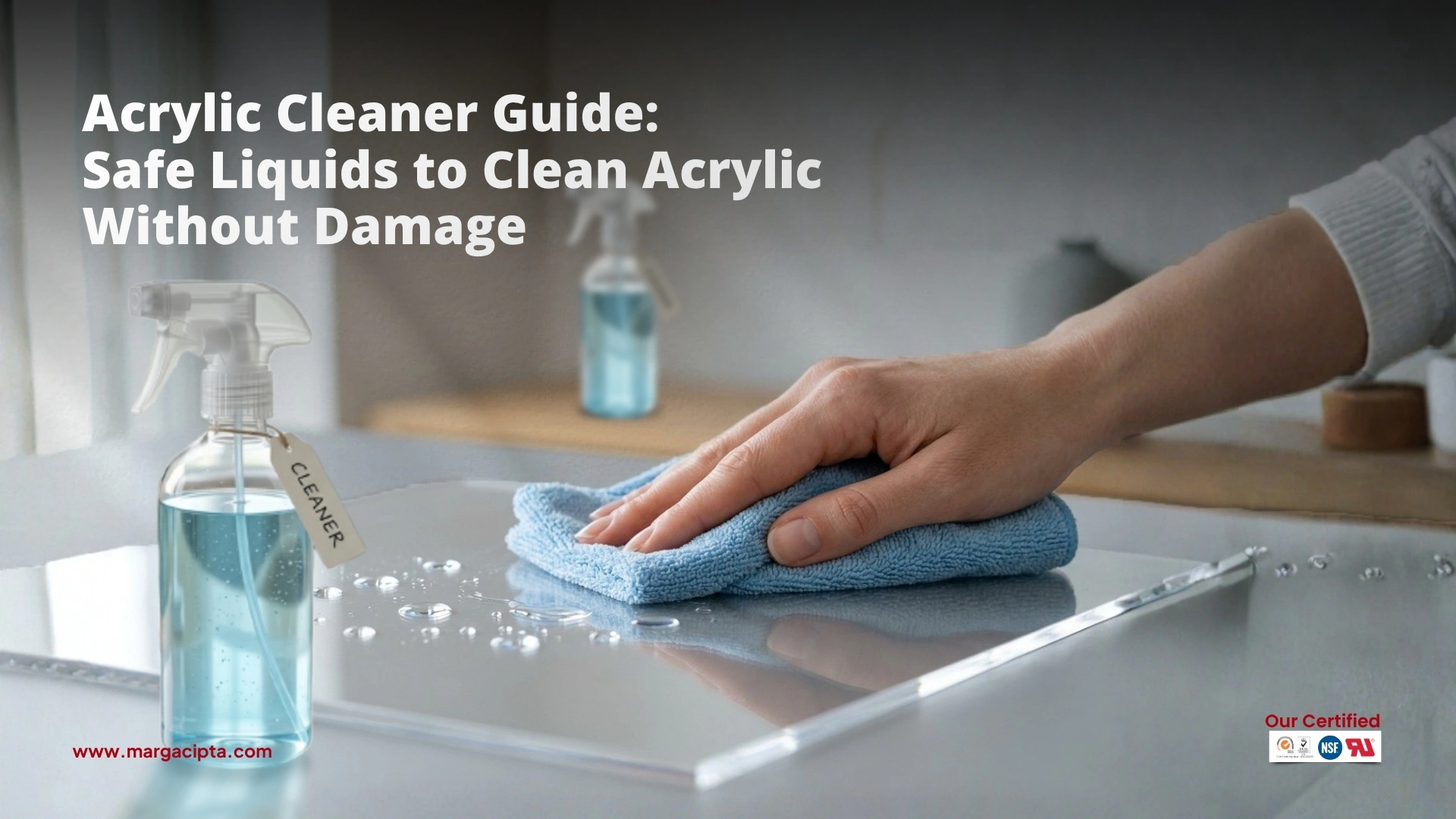
Acrylic Cleaner Guide: Safe Liquids to Clean Acrylic Without Damage

Informational

The best acrylic cleaner is a mild, non-abrasive liquid that cleans the surface without causing scratches, cloudiness, or chemical damage.

Using the wrong cleaner can permanently affect the appearance of acrylic sheets, especially clear acrylic surfaces.

To maintain clarity and durability, it is important to use safe cleaning solutions specifically suited for acrylic materials.

Why Acrylic Requires Special Cleaning

Acrylic sheets are durable and visually appealing, but their surface is more sensitive than glass. Using harsh chemicals or rough cleaning tools may cause:

  • Fine scratches
  • Cloudy appearance
  • Surface damage
  • Reduced clarity over time

Proper cleaning helps preserve the smooth finish and extends the lifespan of the material.

Read also: Why Cast Acrylic Is Better Than Glass: Benefits You Should Know

Best Liquids to Clean Acrylic

1. Mild Soap and Water

A mixture of mild liquid soap and clean water is one of the safest options for acrylic cleaning.

Benefits:

  • Gentle on the surface
  • Easy to use
  • Suitable for regular maintenance

Use a soft microfiber cloth to wipe the acrylic gently.

2. Specialized Acrylic Cleaner

Acrylic-specific cleaners are designed to remove dust, fingerprints, and dirt without damaging the material.

These cleaners help:

  • Reduce static buildup
  • Maintain clarity
  • Minimize streaks

They are recommended for displays, signage, and premium acrylic applications

3. Distilled Water

For light dust and minor cleaning, distilled water can be used safely. It helps prevent mineral spots and streaks that may occur with regular tap water.

Cleaning Tools to Use

When cleaning acrylic, always use:

  • Soft microfiber cloths
  • Non-abrasive wipes
  • Gentle wiping motions

Avoid:

  • Paper towels
  • Rough fabrics
  • Scrubbing pads

These materials can create fine scratches on the surface.

Liquids to Avoid

Certain chemicals should never be used on acrylic sheets.

Avoid:

  • Ammonia-based cleaners
  • Alcohol-based liquids
  • Glass cleaners
  • Strong solvents

These substances can cause acrylic to become cloudy, brittle, or cracked over time.

Proper Cleaning Technique

For best results:

  1. Remove loose dust first
  2. Apply cleaner gently
  3. Wipe in straight motions
  4. Dry using a clean microfiber cloth

Avoid circular scrubbing, as it may create visible swirl marks.

Read also: What Is Cast Acrylic Used For? A Closer Look

Why Acrylic Quality Also Matters

High-quality acrylic sheets generally offer:

  • Better surface consistency
  • Improved resistance to minor scratches
  • Longer-lasting clarity

Using premium acrylic materials helps maintain appearance even with frequent cleaning.

Marga Cipta supplies high-quality acrylic sheets suitable for displays, signage, fabrication, and decorative applications.

Conclusion

Choosing the right acrylic cleaner is essential to maintaining the clarity and durability of acrylic sheets.

Safe cleaning liquids such as mild soap solutions and specialized acrylic cleaners help prevent scratches and damage. Combined with proper cleaning techniques and high-quality materials, acrylic surfaces can remain clear and visually appealing for a long time.

Ready to explore our cast acrylic options? At Margacipta Wirasentosa, we offer high-quality clear cast acrylic sheets from 100% virgin MMA in various thicknesses and custom sizes to fit your needs.

Reach out to our Instagram or download our Product Catalog for more information.

News Release

Things to Check Before Buying Acrylic

Acrylic sheets are widely used in industries such as signage, architecture, furniture, and even food-related applications. But with so many options available, knowing how to choose acrylic sheets is essential to ensure quality, safety, and durability.

1. Decide Between Cast or Extruded Acrylic

There are two main types of acrylic sheets:

  • Cast Acrylic: Known for superior optical clarity and durability, making it ideal for premium applications.
  • Extruded Acrylic: More cost-effective with consistent thickness, great for general purposes.

2. Check Thickness and Size Options

Different projects require different sheet thicknesses and dimensions. Make sure the supplier offers the right size to fit your application needs.

Read also: Choose the Right Cast Acrylic Color for Your Project

3. Evaluate Optical Clarity

High-quality acrylic should be crystal clear, with excellent light transmission similar to glass. Avoid sheets that look cloudy or yellowish, which usually means lower grade acrylic.

4. Consider Durability and Resistance

Choose acrylic that offers impact resistance, UV protection, and weather durability, especially for outdoor use. This ensures long-lasting performance.

5. Look for Certification and Safety Standards

For food displays or hygienic environments, select acrylic sheets that have NSF or FDA certification to guarantee safety in food contact applications.

Read also: Acrylic vs Polycarbonate: Which One Should You Use?

6. Work with a Trusted Supplier

A reputable supplier ensures consistent product quality and adherence to international standards, reducing risks for your projects.

Conclusion

Understanding how to choose acrylic sheets will help you make the best decision for your projects. From material type and thickness to certifications and supplier reliability, every factor matters in achieving the desired results.

Looking for premium acrylic sheets? Marga Cipta is a trusted manufacturer of cast acrylic sheets with NSF-certified options (clear and white opal). Contact us today at info@margacipta.com to find the right acrylic for your needs!

Why Cast Acrylic Is Better Than Glass: Benefits You Should Know

Glass has been the standard material for transparent panels in construction, design, and display. But as technology and material innovation evolve, more industries are turning to cast acrylic as a modern, reliable alternative.

So why exactly is cast acrylic better than glass? Let’s explore the reasons in depth.

1. Superior Impact Resistance

One of the advantages of cast acrylic over glass is its strength. Cast acrylic is far more impact-resistant than glass, making it less likely to shatter or break when subjected to force.

This makes it a safer option for both public and private spaces, especially in high-traffic areas or environments involving children or machinery.

In applications where safety and durability are essential, such as protective barriers, aquariums, or architectural feature, cast acrylic is a clear winner.

2. Lightweight and Easier to Handle

Glass is heavy, fragile, and often requires extra manpower or machinery to transport and install. Meanwhile, cast acrylic is up to 50% lighter than glass of the same thickness.

This makes it much easier to handle during installation, reducing labor costs and minimizing the risk of damage during transport.

For projects that require large panels or elevated installations, the lightweight nature of cast acrylic simplifies the process significantly.

Read also: Cast Acrylic vs Extruded, Which One Is Better?

3. Optical Clarity and Light Transmission

Most people knew that glass gives a perfect clarity, but high-quality cast acrylic actually offers better light transmission compared to standard glass.

It doesn’t contain the greenish tint often found in thicker glass panels, resulting in a more color-neutral, crystal-clear appearance.

This makes cast acrylic ideal for applications where visual appeal is essential, such as display cases, lightboxes, and interior design elements.

4. Design Flexibility and Workability

Glass is rigid and difficult to cut or shape without specialized equipment. Cast acrylic, on the other hand, is highly versatile and can be cut, drilled, engraved, and thermoformed with ease.

Designers and fabricators usually like the acrylic's flexibility for custom projects, including signage with unique shapes, 3D structures, or branded displays that require laser cutting or engraving.

5. Weather Resistance and UV Stability

In outdoor applications, cast acrylic performs better over time than many types of glass. It is resistant to yellowing, cracking, and clouding caused by UV exposure.

This makes it an excellent choice for exterior signage, skylights, and facade panels exposed to sunlight and the elements. With proper maintenance, cast acrylic maintains its appearance and structural integrity for years, even in extreme weather conditions.

Read also: Choose the Right Cast Acrylic Color for Your Project

6. Safety and Shatter-Proof

When glass breaks, it can pose a serious safety hazard due to sharp, scattered shards. Cast acrylic, while durable, doesn’t shatter into dangerous fragments.

Even when broken under intense pressure, it tends to crack into large, dull-edged pieces, reducing the risk of injury. For schools, hospitals, retail environments, or exhibition spaces, this makes cast acrylic a safer and more reliable material choice.

7. Cost-Effectiveness in the Long Run

Although cast acrylic may have a slightly higher upfront cost compared to standard glass, it often proves to be more economical over time.

Its durability means fewer replacements, lower maintenance needs, and reduced breakage during transportation or installation.

For businesses and builders looking for long-term value, cast acrylic offers a better return on investment, especially for demanding environments.

While glass has its place in traditional design and architecture, cast acrylic stands out as the smarter, more versatile alternative. It’s lighter, stronger, safer, and more adaptable, offering unmatched value in both functional and aesthetic applications.

At Margacipta Wirasentosa, we supply premium cast acrylic sheets in a wide range of thicknesses, colors, and finishes to suit your unique project needs.

Ready to upgrade from glass to acrylic?

Visit our Instagram for more details about our cast acrylic sheets.

What Is Cast Acrylic Used For? A Closer Look

Cast acrylic is a durable, lightweight, and visually appealing plastic material that has become a popular choice across many industries. 

Whether you're working on a commercial design project or creating decorative home pieces, cast acrylic offers strength, clarity, and flexibility in a wide range of colors and thicknesses.

But what is cast acrylic used for, exactly? Let’s explore its most common and practical applications.

1.   Signage and Advertising Displays

One of the most widespread uses of cast acrylic is in sign-making and illuminated displays. Its excellent light transmission and ability to be laser-cut, engraved, or printed on make it a favorite for:

  • Storefront signage
  • LED lightboxes
  • Wayfinding signs
  • Retail advertising boards  

Cast acrylic maintains its clarity and vibrancy over time, making it ideal for both indoor and outdoor signage. It can be customized in various colors and finishes to match brand identities.

2.   Display Cases and Product Stands  

Retailers, museums, and exhibitions often use cast acrylic for clear display cases,product risers, and presentation boxes. Its glass-like transparency showcases products attractively without the fragility or weight of real glass.

From high-end jewelry counters to art galleries, cast acrylic is trusted to create elegant, protective enclosures that don’t distract from the items inside.

Read also: Benefits of Using Clear Cast Acrylic Sheet

3.   Interior Design and Furniture  

In modern interiors, cast acrylic is valued for its sleek appearance and versatility. It’s used to make:

  • Room dividers
  • Decorative wall panels 
  • Floating shelves
  • Custom tabletops  

Its ability to be cut, polished, and shaped makes it a designer-friendly material for creating   minimalist or contemporary furniture   pieces with a polished, professional finish.

4.   Architectural Applications  

Thanks to its strength and weather resistance, cast acrylic is often used in architectural elements, especially for:

  • Skylights  
  • Roof panels  
  • Facade details  
  • Outdoor canopies  

It can withstand harsh environments without yellowing or cracking, making it suitable for   long-term outdoor use   in commercial and residential buildings.

5.   Aquariums and Water Features  

Cast acrylic is also commonly used in aquarium manufacturing, especially for larger tanks. Its   optical clarity, impact resistance, and ability to hold water pressure better than glass make it the ideal material for:

  • Home aquariums  
  • Public aquarium panels  
  • Water fountains and decorative tanks  

It offers a distortion-free view, even with thick panels, which is crucial for underwater observation.

6.   Protective Barriers and Shields  

Especially since the pandemic, cast acrylic has seen increasing use in protective barriers, such as:

  • Cashier shields  
  • Reception counter guards  
  • Office desk dividers  

It serves as a clear barrier while maintaining communication and visibility—offering safety without sacrificing customer experience.

Read also: Do’s and Don’ts: Cleaning Acrylic Sheet the Right Way

7.   DIY Projects and Crafts  

Cast acrylic is popular among crafters and hobbyists because it’s easy to cut, engrave, and assemble. People use it for:

  • Custom keychains and signage  
  • Home decor pieces  
  • Photo frames  
  • Wedding and event props  

With the wide variety of colors and finishes available, creative possibilities are endless.

8.   Medical and Industrial Applications

In specialized environments, cast acrylic is used to make:

  • Instrument covers  
  • Medical equipment housings  
  • Machine guards  

Its chemical resistance and clarity make it useful in laboratories, factories, and cleanroom settings where durability and visibility are essential.

So, what is cast acrylic used for?

From advertising and architecture to DIY crafts and safety equipment, cast acrylic proves itself to be a highly versatile and reliable material. 

Its combination of durability, optical clarity, and workability makes it a top choice for both creative and functional applications.

At Margacipta Wirasentosa, we supply premium cast acrylic sheets in a wide range of colors, thicknesses, and finishes—perfect for your next project, big or small.

Looking for high-quality cast acrylic sheets? 

Contact us or visit our Instagram to discover the perfect acrylic solution for your needs.

Do’s and Don’ts: Cleaning Acrylic Sheet the Right Way


Unlike glass, acrylic needs special care during cleaning to avoid scratches, clouding, or even cracks. If cleaned improperly, acrylic can lose its aesthetic appeal and optical clarity over time.

To ensure your acrylic sheet stays clean and clear, it's important to follow the right cleaning practices, and avoid the wrong ones.

In this article, find out about do’s and don’ts of cleaning acrylic sheet surfaces, so you can maintain their quality and extend their lifespan.

1. Do Use a Soft, Non-Abrasive Cloth

When cleaning an acrylic surface, always use a soft microfiber or 100% cotton cloth. These materials are gentle and help remove dust and fingerprints without scratching the surface.

Before applying any cleaning solution, it’s a good idea to lightly rinse or blow off loose dust particles to prevent them from causing fine scratches when wiped.

2. Don’t Use Rough Materials or Paper Towels

Many people mistakenly use paper towels, sponges, or regular cleaning rags on acrylic sheets. These materials may seem soft but can actually be abrasive enough to create tiny scratches.

Over time, these scratches accumulate and cause the acrylic to appear dull or hazy. Avoid using any rough fabric or material that could compromise the surface.

Read also: Why Cast Acrylic Is Better Than Glass: Benefits You Should Know

3. Do Use Acrylic-Safe Cleaners

If you’re using a cleaning solution, make sure it’s specifically formulated for acrylic or plastic surfaces. You can also use mild soap mixed with water for everyday cleaning.

Spray the solution onto the cloth rather than directly onto the sheet, then gently wipe in a circular motion to remove dirt and grime. Rinse with clean water afterward and dry with a fresh, soft cloth.

4. Don’t Use Ammonia or Alcohol-Based Products

One of the biggest mistakes in cleaning acrylic is using harsh chemical cleaners like glass cleaner, alcohol, or products containing ammonia.

These substances can cause the surface to crack, discolor, or become cloudy over time. Even though acrylic may look like glass, it’s chemically different and much more sensitive to solvents. Avoid any cleaner not labeled as safe for plastics or acrylic.

5. Do It Carefully with Clean Hands

Before you begin cleaning, make sure your hands are clean to avoid transferring oils and dirt onto the surface. Move your hands gently and avoid applying excessive pressure.

If you’re cleaning a larger sheet or panel, support it evenly to prevent bending or stress that might cause cracks.

Read also: Acrylic Sheet Thickness Guide: How to Choose the Right One

6. Don’t Use Dry Wiping Methods

Never clean an acrylic sheet while it's dry. Dry wiping can drag dust and dirt particles across the surface, increasing the risk of scratching.

Always ensure the surface is wet or at least slightly damp before wiping, as this creates a buffer between the cloth and the acrylic.

7. Do Regular Maintenance

Routine maintenance helps prevent the buildup of dust, oil, and grime that can be harder to remove later. Cleaning your acrylic sheets regularly using the right methods will keep them looking crystal clear and reduce the need for harsh scrubbing or polishing.

Consistency in care goes a long way in preserving the appearance of your acrylic installations.

Cleaning acrylic sheet the right way is essential if you want to maintain its beauty, durability, and clarity.

While acrylic is a strong and versatile material, it still needs gentle handling and the proper techniques to stay in top condition.

Avoid common cleaning mistakes, choose the right materials, and your acrylic sheet will remain as stunning as the day it was installed.

Need high-quality cast acrylic sheet for your next project?

Visit our Instagram for more details about our cast acrylic sheets, or download our Product Catalog here.